







If you’re researching spreader bar rentals for your next industrial project, you’ve come to the right place. Whether you’re managing a construction site, overseeing manufacturing operations, or coordinating maritime logistics, understanding which industries benefit most from spreader bar rentals—and why—is crucial for making informed equipment decisions. We’ll walk you through the complete landscape of spreader bar applications across major sectors, helping you determine if rental solutions align with your specific lifting needs.
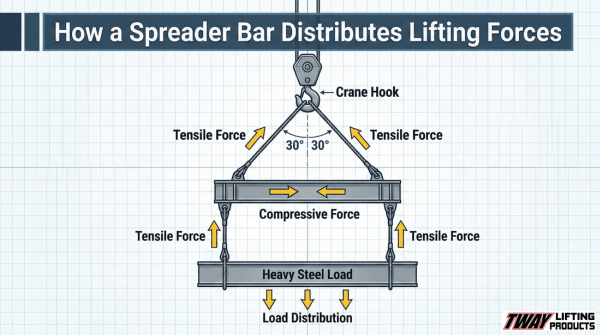
A spreader bar is a below-the-hook lifting device that distributes load weight across multiple points, converting lifting forces into compressive stresses within the bar and tensile forces in the slings. These essential rigging tools enable safe and efficient lifting of heavy or oversized loads across numerous industries, with configurations ranging from fixed bars for repetitive lifts to adjustable and modular systems for variable applications.
TL;DR Summary: Construction and infrastructure sectors lead spreader bar rental demand, utilizing them for lifting precast concrete panels, steel beams, and bridge sections while adhering to strict ASME and OSHA compliance standards. Manufacturing facilities rely on rentals for handling heavy machinery and large components, finding rental more economical than ownership for short-term projects with daily rates projected between $150-$300 in 2026. Energy utilities employ spreader bars for turbine and generator installation, while shipping and maritime operations depend on them for container and cargo transfers. Maintenance teams leverage rentals during plant shutdowns and equipment overhauls, benefiting from flexibility without ownership costs. When selecting rental equipment, consider load capacity requirements, necessary certifications, and support services including emerging smart technologies with IoT monitoring. Tway Lifting stands out as a national provider offering extensive inventory, OSHA/ASME certified equipment, and hydraulic proof-load testing between 125-200% of rated capacity.
Quick Tip: Always verify that your rental spreader bar’s sling angles remain above 30 degrees from vertical—angles below this threshold can dramatically increase compressive forces and risk equipment failure, regardless of the bar’s rated capacity.
The global spreader bar market reached USD 765 million in 2024, driven by increasing demand from construction, shipping, and industrial sectors. With the U.S. construction equipment rental market projected to reach USD 98.29 billion by 2033, understanding the specific applications and benefits of spreader bar rentals across different industries becomes increasingly valuable for project managers and safety directors alike.
What Is a Spreader Bar and How Does It Work in Industrial Applications?
A spreader bar is a structural lifting device that distributes load weight across multiple attachment points while converting concentrated lifting forces into manageable stresses throughout the rigging system. These below-the-hook lifting devices serve as critical safety components for handling heavy or oversized loads across numerous industrial sectors. Spreader bars transform vertical lifting forces into compressive stresses within the bar itself and control tensile forces in the connected slings, enabling safer load management than direct rigging methods.
The fundamental operating principle relies on force distribution mechanics where the bar acts as a horizontal beam that maintains proper sling geometry while preventing load shifting during lifts. This section examines the core functions of spreader bars and identifies the specific lifting challenges they address in industrial applications.
What Are the Main Functions and Benefits of Using Spreader Bars?
The main functions of spreader bars center on load distribution, force conversion, and rigging optimization across industrial lifting operations. Spreader bars distribute load weight across multiple points, converting lifting forces into compressive stresses within the bar and tensile forces in the slings. This force conversion prevents concentrated stress points that commonly cause rigging failures in direct lifting scenarios.
Below-the-hook lifting devices are essential for safely and efficiently lifting heavy or oversized loads across numerous industries, particularly where standard rigging methods cannot maintain adequate safety margins. Available configurations include fixed spreader bars for repetitive lifts, adjustable bars for variable load widths, telescopic bars for greater flexibility, and modular bars with interchangeable components.
Load capacities range from a few tons to several hundred tons depending on application requirements and structural design specifications. Sling angles below 30 degrees from vertical can dramatically increase compressive forces on the bar and tension in slings, potentially leading to equipment failure and serious safety hazards.
What Types of Lifting Challenges Do Spreader Bars Address?
The types of lifting challenges that spreader bars address include load stability problems, rigging configuration issues, capacity limitations, and environmental complications. Load stability issues are resolved by ensuring balanced weight distribution throughout the lift, preventing dangerous load swinging or tilting that occurs with improper rigging techniques.
Improper rigging risks are mitigated through correct sling angle configuration and proper rigging techniques that maintain safe working load limits. Overloading prevention is achieved by matching equipment to rated capacity requirements and ensuring all components remain within their design parameters during operation.
Environmental factors including wind, rain, and extreme temperatures can be managed with appropriate spreader bar selection and specialized materials that maintain structural integrity under adverse conditions. These devices provide controlled lifting geometry that remains consistent regardless of external environmental variables.
Why Do the Construction and Infrastructure Sectors Rely on Spreader Bar Rentals?
Construction and infrastructure sectors rely on spreader bar rentals because they provide cost-effective access to specialized lifting equipment for diverse project requirements. The U.S. construction equipment rental market surpassed USD 64.76 billion in 2024 and is projected to reach USD 98.29 billion by 2033, reflecting the industry’s preference for rental solutions over equipment ownership. Construction applications include lifting precast concrete panels, steel beams, bridge sections, and roof trusses where precise load distribution prevents structural damage. A prime example occurred when Modulift spreader beams were used to lift a 12-tonne bridge in Southampton, UK, demonstrating adaptability in complex infrastructure projects.
Construction projects benefit from spreader bar rentals through reduced capital expenditure, access to specialized equipment configurations, and elimination of storage and maintenance costs. The following sections examine specific applications in commercial building and infrastructure development, plus critical safety compliance requirements.
How Are Spreader Bars Used in Commercial Building Projects?
Spreader bars are used in commercial building projects to safely lift and position large structural components such as precast concrete panels, steel beams, and HVAC systems. These lifting devices distribute load weight across multiple attachment points, preventing stress concentration that could crack concrete panels or bend steel members during installation. Common commercial applications include:
- Precast concrete panel installation for office buildings and retail centers
- Steel beam positioning in high-rise construction
- Rooftop HVAC equipment placement
- Curtain wall and glazing system installation
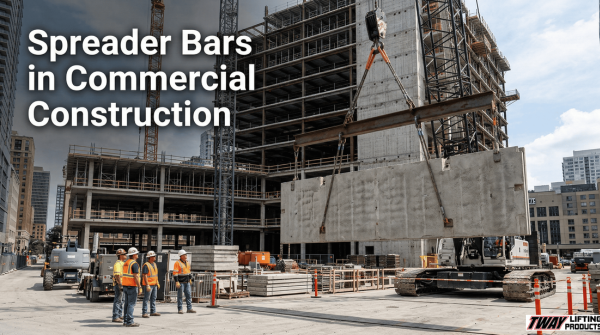
Building contractors prefer spreader bar rentals because projects require different load capacities and configurations throughout construction phases, making ownership impractical for specialized equipment used intermittently.
What Role Do Spreader Bars Play in Bridge and Road Construction?
Spreader bars play a critical role in bridge and road construction by enabling safe lifting of massive precast concrete sections, steel girders, and bridge decking components. Bridge construction requires precise load control to prevent structural damage during installation, particularly when positioning precast bridge sections that can weigh hundreds of tons. Road construction utilizes spreader bars for placing concrete barriers, drainage structures, and utility components.
Infrastructure projects benefit from spreader bar rentals through access to high-capacity equipment without long-term ownership commitments. Bridge projects often require custom spreader bar configurations to match unique span lengths and load distributions, making rental solutions more economical than purchasing specialized equipment for single-use applications.
What Compliance and Safety Standards Must Be Met in Construction Lifting?
Construction lifting operations must meet strict compliance and safety standards to protect workers and prevent equipment failures. ASME B30.20 defines safety requirements for below-the-hook lifting devices, covering marking, inspection, and operation protocols. ASME BTH-1 specifies design criteria for below-the-hook lifting devices to guarantee structural integrity under rated loads.
OSHA 1926.251 mandates that rigging equipment be inspected prior to each shift to prevent equipment failure accidents. OSHA 1926.251(a)(4) requires custom lifting accessories to be proof-tested to 125% of their rated load before use. According to Frank Riggs, Safety Director at Crane Inspection & Certification Bureau (2023), 90% of lifting accidents trace back to inadequate pre-use inspections or human error in following established protocols.
Compliance requirements include:
- Daily visual inspections before each use
- Annual thorough inspections by qualified personnel
- Proof-load testing certification documentation
- Proper load capacity marking and identification
Construction companies rely on certified rental providers to ensure spreader bars meet all regulatory requirements, reducing liability and ensuring project safety compliance.
How Are Spreader Bars Utilized in the Manufacturing and Industrial Sector?
Spreader bars are utilized in the manufacturing and industrial sector to handle heavy machinery, dies, and large components throughout assembly lines. Manufacturing facilities rely on these lifting devices to maintain production flow while ensuring worker safety during equipment installation, maintenance, and material handling operations. The following sections examine specific equipment requirements, rental benefits, and risk mitigation strategies that make spreader bars essential in industrial environments.
What Types of Equipment or Components Require Spreader Bars for Lifting?
Heavy manufacturing equipment requiring spreader bars for lifting includes injection molding machines, CNC equipment, stamping presses, and industrial generators. Large dies used in automotive and aerospace manufacturing typically weigh 15-50 tons and demand precise load distribution to prevent warping during transport. Assembly line components such as conveyor systems, robotic work cells, and heavy tooling fixtures benefit from spreader bar stability during installation.
Oversized industrial components like reactor vessels, heat exchangers, and storage tanks require spreader bars to maintain structural integrity during lifting operations. A 2019 study by the Manufacturing Institute found that 78% of equipment damage during facility moves resulted from improper rigging techniques.
How Do Manufacturers Benefit from Spreader Bar Rentals Versus Ownership?
Manufacturers benefit from spreader bar rentals through reduced capital expenditure and access to specialized equipment for specific projects. Renting proves more economical for short-term projects or when a variety of spreader bar sizes and capacities are needed across different production requirements.
Ownership costs extend beyond initial purchase price to include maintenance, repairs, inspection, certification, storage, and insurance expenses that can double total equipment investment over five years. Daily rental rates in Raleigh, North Carolina for 2026 are projected between $150 and $300 depending on capacity and configuration requirements.
Rental arrangements provide immediate access to certified equipment with current inspection documentation, eliminating compliance delays in time-sensitive manufacturing schedules.
What Industry-Specific Risks Do Spreader Bars Help Mitigate?
Spreader bars help mitigate production line disruption risks by enabling safe handling of critical manufacturing equipment without facility downtime. Equipment damage risks are reduced through proper load distribution that prevents stress concentrations on sensitive components like hydraulic systems and electronic controls.
Worker injury risks from manual handling of heavy dies and tooling are eliminated through mechanical lifting solutions that maintain safe working distances. A 2021 OSHA analysis of manufacturing incidents revealed that 43% of lifting-related injuries occurred during equipment changeovers where proper rigging equipment was unavailable.
Quality control risks are mitigated by preventing load shifting that could damage precision-machined surfaces or calibrated equipment during relocation operations.
In What Ways Do the Energy and Utilities Industries Use Spreader Bars?
The energy and utilities industries use spreader bars for installation and maintenance of turbines, generators, and other heavy equipment in power plants. Power generation facilities require precise handling of massive components weighing hundreds of tons, from steam turbines in nuclear plants to wind turbine nacelles offshore. Oil refineries utilize spreader bars for reactor vessel maintenance, while utility companies depend on them for transformer installations and transmission line construction.
Energy sector lifting operations demand exceptional safety standards due to hazardous environments, extreme weights, and critical infrastructure requirements. The following sections examine specific applications across renewable energy projects, traditional oil and gas operations, and essential safety enhancements that spreader bars provide.
How Are Spreader Bars Applied in Wind, Solar, and Power Generation Projects?
Spreader bars are essential for wind turbine assembly, lifting nacelles weighing up to 400 tons and rotor assemblies exceeding 150 tons during offshore installations. Solar power projects require spreader bars for positioning heavy inverter units, transformer stations, and pre-assembled panel arrays across utility-scale installations. Nuclear power generation relies on spreader bars for reactor pressure vessel maintenance, steam generator replacements, and fuel assembly handling operations.
Wind farm construction presents unique challenges with spreader bars managing dynamic loads from ocean currents and wind forces during offshore installations. Hydroelectric projects utilize specialized spreader bars for turbine runner installations, penstock positioning, and dam gate mechanisms. Combined cycle power plants depend on spreader bars for gas turbine installations, heat recovery steam generators, and cooling system components.
What Unique Lifting Scenarios Occur in Oil, Gas, and Utility Operations?
Oil and gas operations require spreader bars for offshore platform installations, drilling rig components, and subsea equipment deployments in harsh marine environments. Refinery maintenance involves spreader bars for reactor vessel lifts, distillation column installations, and heat exchanger replacements during scheduled shutdowns. Pipeline construction utilizes spreader bars for positioning large-diameter pipe sections, compressor station equipment, and valve assemblies across challenging terrain.
Utility operations demand spreader bars for electrical substation transformer installations, transmission tower assembly, and underground cable vault construction. Natural gas processing facilities rely on spreader bars for compressor units, pressure vessels, and cryogenic equipment handling. Petrochemical plants require specialized spreader bars for catalyst regeneration systems, fractionation towers, and reactor internals during maintenance cycles.
How Do Spreader Bars Enhance Safety in Energy Projects?
Spreader bars enhance safety in energy projects by distributing loads across multiple lifting points, reducing stress concentrations that could cause catastrophic equipment failure. Proper load distribution prevents dangerous swinging motions during lifts in windy offshore conditions and eliminates single-point failures that could damage critical infrastructure. Energy facilities utilize spreader bars to maintain safe clearances from high-voltage equipment, radioactive materials, and pressurized systems during maintenance operations.
Safety protocols in energy projects require spreader bars to meet stringent certification standards including ASME B30.20 and project-specific nuclear or offshore regulations. Emergency response capabilities improve with spreader bars providing controlled lifting scenarios for damaged equipment removal and rapid component replacement. Load monitoring systems integrated into modern spreader bars provide real-time data on stress levels, preventing overload conditions that could endanger personnel or critical infrastructure.
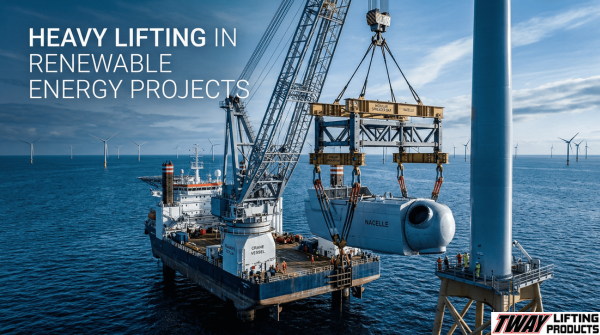
This comprehensive approach to spreader bar applications across energy sectors demonstrates their crucial role in maintaining safe, efficient operations while supporting America’s growing renewable energy infrastructure and traditional power generation needs.
How Does the Shipping, Logistics, and Maritime Sector Employ Spreader Bars?
The shipping, logistics, and maritime sector employs spreader bars for lifting shipping containers, boats, and subsea equipment across port operations, vessel construction, and offshore projects. Maritime applications require specialized lifting solutions to handle the unique challenges of salt water environments, extreme weather conditions, and precise cargo positioning aboard vessels.
The global spreader bar market reached USD 765 million in 2024, driven by increasing demand from construction, shipping, and industrial sectors. Port automation initiatives and growing container traffic volumes continue to expand spreader bar applications in maritime logistics. The following sections examine specific container lifting requirements, cargo transfer considerations, and safety protection measures in maritime operations.
Why Are Spreader Bars Essential for Lifting Shipping Containers and Cargo?
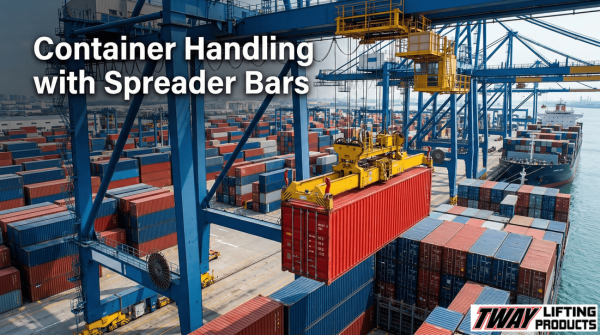
Spreader bars are essential for lifting shipping containers because they distribute the container’s weight across multiple lifting points, preventing structural damage to container corner castings and ensuring balanced load transfer. Standard shipping containers require precise weight distribution to avoid corner post buckling, twist lock failure, or uneven loading that could compromise cargo integrity during transport.
Container lifting operations utilize spreader bars to maintain proper sling angles and prevent side loading on corner fittings. The bars ensure that lifting forces remain vertical through the container’s designated lifting points, which are engineered to handle specific load capacities. Port cranes and mobile harbor cranes rely on spreader bar systems to achieve the precision positioning required for efficient container stacking and vessel loading operations.
What Are the Key Considerations in Heavy Cargo Transfer Operations?
The key considerations in heavy cargo transfer operations include load weight distribution, environmental conditions, vessel stability, and precise positioning requirements for safe cargo placement. Maritime cargo transfers must account for vessel movement, tide changes, and weather conditions that can affect lifting dynamics during loading and unloading operations.
Crane operators must calculate dynamic loads caused by vessel motion, wind forces, and sea conditions when planning heavy cargo transfers. Load monitoring systems provide real-time feedback on weight distribution and stress levels throughout the lifting operation. Proper rigging techniques ensure that spreader bars maintain structural integrity while accommodating the complex forces present in maritime environments, including lateral loads from wind and vessel movement.
How Do Spreader Bars Protect Materials and Workers During Lifting?
Spreader bars protect materials during lifting by distributing concentrated forces across multiple attachment points, preventing damage to cargo surfaces, container structures, and delicate equipment components. The bars eliminate point loading that could cause denting, crushing, or structural failure in shipped goods, particularly important for sensitive machinery, prefabricated components, and high-value cargo.
Worker protection occurs through improved load control, reduced swing radius, and predictable lifting behavior that minimizes personnel exposure to moving loads. Spreader bars provide visual load status indicators and maintain consistent sling angles that reduce the risk of sudden load shifts or rigging failures. Maritime operations benefit from enhanced safety margins during cargo handling in challenging environmental conditions where worker positioning and escape routes require careful planning around lifting zones.
What Maintenance, Repair, and Refurbishment Tasks Require Spreader Bar Rentals?
Maintenance, repair, and refurbishment tasks that require spreader bar rentals include plant shutdowns, equipment overhauls, heavy component replacements, and routine maintenance operations across industrial facilities. These specialized lifting applications demand precise load distribution when handling large machinery, transformers, heat exchangers, and production equipment that exceeds standard crane capacity or requires controlled positioning.
Industrial maintenance scenarios frequently involve removing and installing components weighing several tons in confined spaces with limited overhead clearance. Spreader bars enable safe lifting by distributing loads across multiple attachment points, reducing stress concentrations that could damage sensitive equipment during removal or installation. Power plants, refineries, manufacturing facilities, and chemical processing plants rely on spreader bar rentals during scheduled maintenance windows when equipment downtime costs thousands of dollars per hour.
The following sections examine specific maintenance applications where spreader bars provide critical lifting solutions for temporary repair projects and operational efficiency improvements.
How Are Spreader Bars Used in Plant Shutdowns and Equipment Overhauls?
Plant shutdowns and equipment overhauls use spreader bars for lifting turbine components, reactor vessels, heat exchangers, and heavy machinery during major maintenance cycles. Power generation facilities employ spreader bars to remove generator rotors, transformer cores, and boiler components that require precise positioning to avoid damage to surrounding equipment. Refineries utilize spreader bars during turnaround operations to extract distillation columns, pressure vessels, and catalyst units weighing up to 200 tons.
Chemical processing plants rely on spreader bars for reactor maintenance, where improper rigging could result in catastrophic equipment damage or extended downtime. Manufacturing facilities use spreader bars during production line overhauls to position heavy presses, injection molding machines, and automated assembly equipment. These applications demand rental solutions because shutdown schedules vary annually and equipment specifications change based on maintenance scope.
What Advantages Do Rentals Offer During Temporary Maintenance Projects?
Rentals offer significant cost advantages during temporary maintenance projects by eliminating storage costs, maintenance expenses, and certification requirements for specialized equipment used infrequently. Project-specific rental agreements provide access to properly sized spreader bars without long-term capital investment, particularly valuable for facilities with varying maintenance schedules or equipment specifications. Rental providers ensure current certifications, inspection compliance, and proper load ratings without internal resource allocation for equipment management.
Flexibility represents another key advantage, allowing maintenance teams to select appropriate spreader bar configurations based on specific lifting requirements rather than adapting projects to available owned equipment. Emergency repairs benefit from rental availability when owned equipment is inadequate or unavailable, preventing extended downtime costs that exceed rental expenses. Professional rental services include engineering support, rigging consultation, and safety compliance assistance that internal teams may lack for complex lifting scenarios.
How Can Spreader Bars Improve Efficiency in Repair Operations?
Spreader bars improve efficiency in repair operations by reducing setup time, enabling simultaneous multi-point lifts, and providing stable load control that accelerates component positioning. A UK electrical contractor revolutionized cable drum handling with spreader bars, leading to increased efficiency and safety according to an Autoguide Equipment case study. Balanced load distribution eliminates manual positioning adjustments that consume significant time during precision installations, particularly when aligning heavy machinery with existing foundations or mounting points.
Maintenance teams achieve faster turnaround times through improved load stability that reduces repositioning attempts and eliminates damage risks requiring repair delays. Spreader bars enable lifting operations in confined spaces where traditional rigging methods prove inadequate, expanding maintenance capabilities without facility modifications. Enhanced safety protocols reduce incident-related delays and worker compensation claims that impact overall project efficiency and completion schedules.
What Should You Consider When Renting Spreader Bars for Your Industry Application?
When renting spreader bars for your industry application, you should consider load capacity calculations, inspection requirements, and support services. These factors determine project safety, compliance, and operational efficiency across different lifting scenarios.
What Factors Determine the Right Spreader Bar Size and Capacity?
The right spreader bar size and capacity are determined by engineering calculations governed by force vectors, material properties, and safety factors. ASME BTH-1 standards provide detailed requirements for these critical calculations.
Key sizing factors include:
- Load weight and distribution – Total weight plus dynamic forces during lifting
- Lifting geometry – Sling angles and attachment point spacing
- Safety factors – Minimum 5:1 ratio between breaking strength and working load limit
- Environmental conditions – Wind loads, temperature effects, and operational factors
Engineering analysis evaluates stress distribution across the spreader bar structure. Material properties such as yield strength, fatigue resistance, and corrosion tolerance influence capacity ratings. Force vector calculations determine optimal sling angles to minimize bar compression and prevent equipment overload.
How Do Inspection, Certification, and Safety Procedures Affect Rentals?
Inspection, certification, and safety procedures directly affect rental availability, costs, and project scheduling. Initial inspection is required before first use of rental equipment to verify structural integrity and operational readiness.
Required inspection protocols include:
- Frequent visual inspections – Conducted before each lift or shift to identify wear, damage, or defects
- Periodic thorough inspections – Performed by qualified persons at regular intervals, typically annually
- Static proof-load testing – Applies 125% of rated capacity under controlled conditions
- Hydraulic proof-load testing – Ranges between 125% and 200% of rated capacity for rental fleets
Documentation requirements include inspection certificates, load test records, and maintenance histories. Non-compliant equipment cannot be legally operated, potentially causing project delays. Rental providers must maintain current certifications to ensure immediate equipment availability.
What Support Services Should You Expect from a Spreader Bar Rental Provider?
You should expect comprehensive support services including technical assistance, monitoring technology, and maintenance coverage from a spreader bar rental provider. Smart spreader bars incorporate load monitoring systems, IoT sensors, and wireless data logging for real-time load information.
Essential support services include:
- Load monitoring systems – Real-time weight distribution and capacity alerts
- Technical consultation – Engineering support for lift planning and rigging design
- 24/7 monitoring – Remote tracking of equipment status and performance data
- Predictive maintenance – AI technology analyzes equipment data to predict failures and optimize performance
Modulift has introduced load monitoring spreader beams with integrated load cells providing real-time data on load at each beam end. Remote monitoring capabilities improve safety and efficiency in lifting operations by detecting overload conditions before equipment failure occurs.
This comprehensive consideration framework ensures optimal spreader bar selection while maintaining compliance with industry safety standards and operational requirements.
How Can Tway Lifting Assist Your Industry With Reliable Spreader Bar Rentals?
Tway Lifting assists industries across the United States with comprehensive spreader bar rental services that combine extensive inventory, certified compliance, and nationwide delivery capabilities. The company’s strategic positioning and rigorous testing protocols make it a trusted partner for industrial lifting applications requiring below-the-hook lifting devices.
The following sections detail Tway Lifting’s service differentiators and provide essential insights about the industries that commonly rely on spreader bar rentals.
What Makes Tway Lifting’s Spreader Bar Rental Services Stand Out for U.S. Industries?
Tway Lifting’s spreader bar rental services stand out through their extensive inventory of fixed, adjustable, and modular spreader bars paired with nationwide delivery capabilities. The company maintains compliance with all OSHA and ASME standards, ensuring certified equipment performance across diverse industrial applications.
Tway Lifting subjects its rental fleet to hydraulic proof-load testing between 125% and 200% of rated capacity, exceeding standard requirements for equipment verification. This rigorous testing protocol provides additional safety margins for critical lifting operations.
According to President & CEO Peter Hansen in 2020, building a Wire Rope Products Plant in Indiana strengthened Tway Lifting’s position with the industrial sector in the Midwest. This strategic expansion enhances the company’s ability to serve manufacturing and infrastructure projects throughout the region.
What Are the Essential Takeaways About Industries That Commonly Use Spreader Bar Rentals?
The essential takeaways about industries that commonly use spreader bar rentals center on market leadership, technological advancement, and safety protocols driving industry growth. Key industry players include Tway Lifting, Modulift, Holloway Houston Inc., and Engineered Rigging, each serving specialized market segments.
Rapid industrialization and infrastructure development, particularly in the Asia Pacific region, drives market growth for spreader bar applications. Automation and IoT integration with smart cranes and lifting devices provides real-time data on load, position, and equipment health, enhancing operational safety and efficiency.
Proper lift planning, qualified personnel, correct equipment selection, and adherence to safety standards are essential solutions to common challenges across all industries using spreader bar rentals. These factors determine project success and worker safety in construction, manufacturing, energy, and maritime applications.
This comprehensive approach to spreader bar rentals positions Tway Lifting as a reliable partner for industries requiring specialized lifting solutions with proven safety records and technical expertise.