


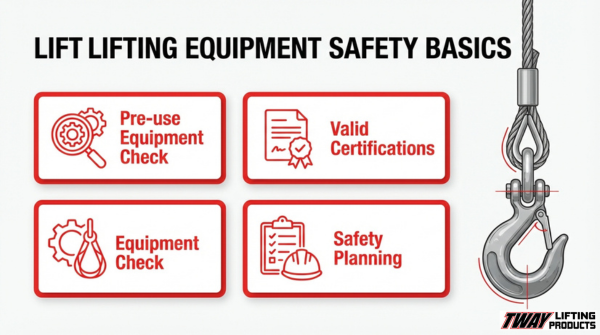

Safety basics for renting lifting equipment are the inspection, documentation, and planning practices that confirm rented slings, hoists, shackles, and cranes are safe before any load leaves the ground. Rented gear passes through multiple jobsites and operators, which introduces wear patterns, undocumented damage, and maintenance gaps that demand systematic verification at every stage.
This guide covers pre-use equipment inspection, certifications and documentation, OSHA compliance, rated capacity determination, pre-lift safety planning, common mistakes to avoid, and professional rental services.
Pre-use inspection requires checking every rented component against specific removal-from-service criteria. Wire rope slings, chain slings, synthetic slings, hoists, and shackles each have distinct failure indicators ranging from broken wires and stretched links to exposed load-bearing yarns and deformed hooks.
Certifications and documentation confirm that rented equipment has been proof-tested and independently verified. Current load test certificates, third-party inspection records, and legible identification tags must accompany every piece of rental gear before it enters service.
OSHA regulations apply to rented lifting equipment with the same force as owned assets. Federal standards govern pre-shift inspections, crane design specifications, and wire rope removal criteria; the employer controlling the worksite bears compliance responsibility regardless of equipment ownership.
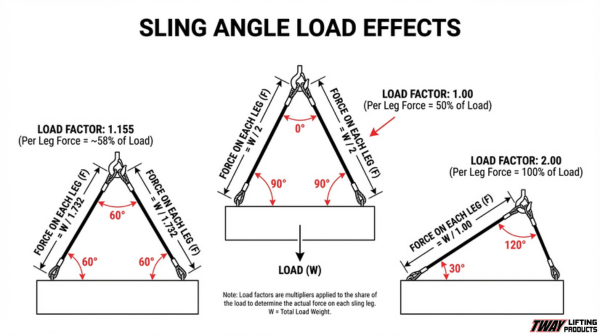
Rated capacity determination accounts for actual load weight, sling angle, and environmental conditions. Sling angles as low as 30° from horizontal can double the tension on rigging, and temperature extremes alter the material properties of both wire rope and synthetic slings.
Pre-lift safety planning requires a documented lift plan, a job hazard analysis, and oversight by a competent rigger who verifies every variable before the lift begins.
Common safety mistakes include skipping pre-use inspections, operating unfamiliar equipment without familiarization, and ignoring manufacturer instructions. Professional rental and inspection services close these gaps by delivering gear that has been evaluated by certified specialists before it reaches the jobsite.
Why Is Safety Critical When Renting Lifting Equipment?
Safety is critical when renting lifting equipment because improperly maintained or misused gear causes fatal injuries, regulatory violations, and significant legal liability. The consequences of equipment failure during a lift are immediate and irreversible, making safety the foundation of every rental decision.
Lifting equipment operates under extreme mechanical stress. Unlike owned assets that a single team tracks from purchase to retirement, rented equipment passes through multiple jobsites and operators. This shared-use cycle introduces unique risks: unfamiliar wear patterns, undocumented damage from previous renters, and gaps in maintenance history that may not be immediately visible. Each of these variables can compromise a lift if left unchecked.
The human cost alone demands rigorous attention. According to the U.S. Bureau of Labor Statistics, from 2011 to 2017, a total of 297 crane-related deaths occurred in the United States, averaging 42 fatalities per year. Contact with objects and equipment caused 756 worker deaths in 2024, as reported by the National Safety Council. These figures represent preventable incidents where proper inspection, training, or equipment selection could have changed the outcome.
Regulatory exposure adds another layer of urgency. OSHA holds the employer controlling the worksite responsible for compliance, regardless of whether equipment is owned or rented. Failing to verify that rented wire rope slings, chain slings, hoists, or shackles meet current standards can trigger citations, project shutdowns, and increased insurance costs. The legal dimension is equally serious; in the 2020 case of United Rentals North America Inc. v. Evans, the court examined how loading incorrect equipment contributed to a fatal crash, illustrating how rental-related negligence creates direct liability.
For any operation using rented lifting gear, safety is not an optional layer added after logistics. It is the prerequisite that determines whether a lift proceeds or stops. Every section that follows addresses a specific part of this safety framework, from pre-use inspections and documentation verification to rated capacity calculations, lift planning, and worker training requirements.
What Should You Inspect Before Using Rented Lifting Equipment?
You should inspect rented lifting equipment for visible damage, wear beyond service limits, and proper identification before every use. The following subsections cover wire rope slings, chain slings, synthetic slings, hoists, and hardware.
How Do You Check Wire Rope Slings for Damage?
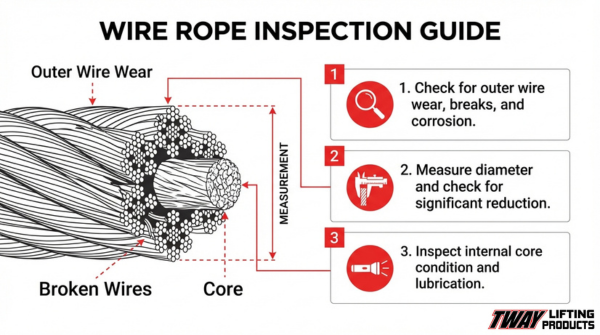
You check wire rope slings for damage by examining them for broken wires, excessive wear, and structural deformation along the entire working length. According to OSHA 1926.1413(a)(2)(ii)(A), rotation resistant wire rope must be removed from service if there are two randomly distributed broken wires in six rope diameters or four randomly distributed broken wires in 30 rope diameters.
Key removal-from-service criteria include:
- Wire rope must be retired if outer wire wear exceeds one-third of the original outer wire diameter.
- Eight-part braided wire rope slings require removal at 40 broken wires per braid, or upon severe localized abrasion, kinking, crushing, or birdcaging.
- Steel core slings should not be used above 400°F, fiber core slings above 180°F, or any wire rope sling below -60°F.
Catching these defects on rented slings before a lift prevents catastrophic rigging failure under load.
How Do You Inspect Chain Slings Before a Lift?
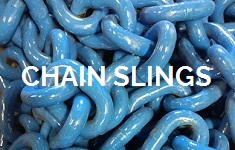
You inspect chain slings before a lift by examining every link for stretching, gouging, bending, and heat discoloration. ASME B30.9 criteria require removal from service when chain slings exhibit stretched links, bent or deformed components, or evidence of heat damage.
A thorough pre-use check should cover:
- Measurable elongation beyond the manufacturer’s original link dimensions.
- Nicks, gouges, or corrosion that reduce cross-sectional thickness.
- Cracked or twisted master links, coupling links, and end fittings.
- Missing or illegible identification tags showing rated capacity and sling grade.
Because rented chain slings experience varied jobsite conditions between users, never assume the previous renter returned them in serviceable condition.
How Do You Evaluate Synthetic Slings for Wear?
You evaluate synthetic slings for wear by inspecting the webbing or roundsling cover for cuts, abrasion burns, chemical exposure, and UV degradation. Synthetic materials are more vulnerable to environmental damage than steel, so surface-level defects often indicate deeper structural compromise.
Remove synthetic slings from service when you find:
- Cuts, tears, or snags that expose the inner load-bearing yarns.
- Melted or charred fibers from heat contact or friction burns.
- Acid or alkali staining that indicates chemical degradation.
- Knots tied in flat webbing slings, which concentrate stress and reduce capacity.
Even minor surface damage on a rented synthetic sling warrants rejection, since you cannot verify its full usage history.
What Should You Look for When Inspecting Rented Hoists?
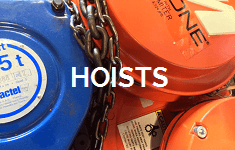
You should look for functional brakes, undamaged chains or wire rope, and legible load ratings when inspecting rented hoists. ASME B30.16 applies to powered hoists and manual chainfalls, covering their construction, marking, inspection, use, and training requirements.
Focus your inspection on these components:
- Hook condition, including latch function, throat opening, and twist or spread.
- Load chain for stretched, gouged, or corroded links.
- Brake engagement by lifting a light test load slightly off the ground and holding.
- Controls, labels, and capacity markings for legibility and accuracy.
A hoist with a slipping brake or a distorted hook should never be placed into service, regardless of how recently it was rented.
How Do You Verify Shackles and Hardware Are Safe to Use?
You verify shackles and hardware are safe to use by checking for deformation, proper pin engagement, and legible working load limit markings. Every shackle, eyebolt, turnbuckle, and connecting link in a rented rigging assembly must be individually inspected.
Confirm the following before rigging:
- The shackle pin threads smoothly and seats fully without cross-threading.
- No visible bending, elongation, or opening of the shackle body beyond original dimensions.
- The working load limit stamp or tag is present and matches the lift plan requirements.
- Cotter pins or bolt-type shackle nuts are intact and properly secured.
With pre-use hardware checks complete, the next step is confirming that all rented equipment carries the proper certifications and documentation.
What Certifications and Documentation Should Rental Equipment Have?
Rental lifting equipment should have a current load test certificate, proof of third-party inspection, and a complete equipment identification tag. These documents verify the equipment meets safety and compliance standards before use on any job site.
What Does a Current Load Test Certificate Confirm?
A current load test certificate confirms that lifting equipment has been proof-tested to a specific capacity and performed within acceptable limits under controlled conditions. The certificate verifies the equipment’s rated capacity, the date testing occurred, the test load applied, and the testing method used.
Without this document, there is no verifiable evidence that the sling, hoist, or shackle can safely handle the loads you plan to lift. Certificates typically reference ASME B30 standards, which govern safety requirements for slings, hoists, and other lifting hardware. According to ANSI, ASME B30.9-2021 provides the safety standard for slings, covering alloy steel chain, wire rope, metal mesh, synthetic rope, synthetic webbing, and polyester roundslings.
Always confirm the certificate is current and matches the specific piece of equipment being rented.
Why Do You Need Proof of Third-Party Inspection?
You need proof of third-party inspection because it provides an independent, unbiased verification that the equipment meets safety standards. Rental companies have a financial interest in keeping equipment in service; a qualified third-party inspector has no such conflict.
Third-party inspection reports document:
- Structural integrity and condition of load-bearing components.
- Compliance with applicable OSHA and ASME standards.
- Identification of wear, deformation, or damage requiring removal from service.
This documentation protects your crew and shields your organization from liability. In practical terms, the absence of independent inspection records is one of the first things investigated after a workplace incident. Requiring this proof before accepting any rental equipment is a non-negotiable best practice for every lift.
What Should the Equipment Identification Tag Include?
The equipment identification tag should include the manufacturer’s name, rated capacity, serial or identification number, and date of manufacture. These four data points allow you to trace the equipment’s history, verify its specifications, and confirm it matches accompanying certifications.
Additional details commonly found on compliant tags include:
- Sling or equipment type and material.
- Length and configuration.
- Applicable standard reference, such as ASME B30.9 or B30.16.
- Any temperature or environmental use restrictions.
If the identification tag is missing, illegible, or damaged, the equipment should not be used. A tag that cannot be read offers no more protection than no tag at all. Verified documentation sets the foundation for safe operation under OSHA regulations.
Who Is Responsible for Safety When Equipment Is Rented?
Safety when equipment is rented is a shared responsibility between the rental provider and the end user. Each party carries distinct obligations that, when combined, create a complete chain of accountability from equipment dispatch to job-site operation.
The rental company is responsible for supplying equipment that meets applicable standards, providing current inspection documentation, and ensuring gear is in serviceable condition before delivery. Equipment leaving a rental facility should arrive with valid load test certificates, legible identification tags, and no pre-existing defects.
The end user bears responsibility for several critical tasks:
- Conducting a pre-use visual inspection before every shift, as required by OSHA standard 1926.1412(a), which mandates that a competent person check for apparent deficiencies prior to each use.
- Verifying that the equipment’s rated capacity matches the planned lift.
- Ensuring only trained, qualified personnel operate or rig with the rented gear.
- Removing any equipment from service that shows signs of damage or wear during use.
- Developing a lift plan and job hazard analysis specific to the work site.
Contractual rental agreements typically outline where the provider’s responsibility ends and the user’s begins, but OSHA holds the controlling employer accountable for workplace hazards regardless of who owns the equipment. This means the company directing the work on site cannot transfer its safety obligations to the rental provider through a contract clause alone.
For most lifting operations, the safest approach treats responsibility as overlapping rather than divided. Rental providers who deliver well-maintained, fully documented equipment reduce risk at the source, while site teams who inspect, plan, and operate correctly prevent incidents during use. Gaps between these roles, where one party assumes the other handled a safety check, are where accidents most commonly occur.
Understanding these shared duties sets the stage for knowing which specific OSHA regulations govern rented lifting equipment.
What OSHA Regulations Apply to Rented Lifting Equipment?
OSHA regulations that apply to rented lifting equipment include standards for pre-shift inspections, crane design specifications, and wire rope removal criteria. These federal requirements apply regardless of whether equipment is owned or rented.
OSHA standard 1926.1412(a) requires a competent person to begin a visual inspection of cranes and derricks prior to each shift, looking specifically for apparent deficiencies. Under 29 CFR 1910.179(b)(2), all overhead and gantry cranes installed after August 31, 1971, must meet the design specifications of ANSI B30.2.0-1967. Additionally, OSHA 1926.1413 establishes wire rope removal criteria, including mandatory removal of rotation resistant wire rope when two randomly distributed broken wires appear in six rope diameters or four in 30 rope diameters.
These standards place compliance obligations on the employer controlling the worksite, not on the rental company alone. Because rented lifting equipment must meet the same OSHA requirements as owned equipment, operators should verify that every crane, hoist, and sling meets current federal standards before any lift begins. Understanding how rated capacity factors into safe equipment selection is equally important.
How Do You Determine the Right Rated Capacity for Your Lift?
You determine the right rated capacity for your lift by matching the equipment’s working load limit to the actual load weight, sling configuration, and environmental factors. The following sections cover overload consequences, environmental impacts, and sling angle calculations.
What Happens If You Exceed the Working Load Limit?
Exceeding the working load limit creates immediate risk of catastrophic equipment failure. Slings, shackles, and hoists are engineered with a design factor above their rated capacity, but surpassing the working load limit erodes that safety margin rapidly.
Consequences of overloading include:
- Sudden sling fracture or chain link deformation, dropping the load without warning.
- Permanent stretching of wire rope or synthetic webbing, making the equipment unsafe for future use.
- Structural damage to hoists, cranes, or spreader beams that may not be visible externally.
- Serious injury or fatality to workers in the load’s fall zone.
Even a small overload, sometimes as little as 10% above rated capacity, can accelerate fatigue damage that compounds over repeated lifts. For rented equipment especially, operators should never assume prior use history and must treat the marked working load limit as an absolute ceiling.
How Do Environmental Conditions Affect Rated Capacity?
Environmental conditions affect rated capacity by altering the material properties and structural integrity of lifting equipment. Temperature extremes, wind, moisture, and chemical exposure each reduce the safe working load in different ways.
Key environmental factors include:
- Temperature: Wire rope slings with fiber cores should not be used above 180°F, while steel core slings have a ceiling of 400°F. Temperatures below -60°F make steel brittle and prone to sudden fracture.
- Wind: High winds increase dynamic loading on suspended loads, effectively adding force beyond the static weight.
- Moisture and corrosion: Prolonged exposure to rain, saltwater, or humidity accelerates wire rope corrosion and weakens synthetic sling fibers.
- Chemical exposure: Acids, solvents, and alkaline substances degrade synthetic webbing and can compromise alloy steel chain integrity.
Operators should derate equipment capacity or postpone lifts when conditions fall outside manufacturer specifications. This precaution is particularly important with rented equipment, where the full exposure history may be unknown.
How Does Sling Angle Change the Effective Load Rating?
Sling angle changes the effective load rating by increasing tension on each sling leg as the angle decreases from vertical. The shallower the angle between the sling and the horizontal plane, the greater the force each leg must bear.
According to ASME B30.9 sling safety standards, the formula for calculating tension in a single sling leg is: (Load Weight ÷ Number of Sling Legs) × Load Angle Factor. At a 60° angle from horizontal, the Load Angle Factor is 1.155, meaning each leg carries roughly 15.5% more tension than in a straight vertical lift. A 30° horizontal sling angle doubles the tension on the rigging entirely, applying a factor of 2.0 compared to vertical.
This relationship means a sling rated for 10,000 pounds in a vertical hitch effectively handles only 5,000 pounds at a 30° angle. Rigging crews should never allow sling angles to drop below 30° from horizontal, and maintaining angles at 60° or above provides the safest operating margin for rented slings and hardware.
With rated capacity determined, pre-lift safety planning ensures every variable is accounted for before the load leaves the ground.
What Pre-Lift Safety Planning Is Required for Rental Gear?
Pre-lift safety planning for rental gear requires a documented lift plan, a job hazard analysis, and oversight by a competent rigger. These three elements work together to prevent incidents before any load leaves the ground.
Why Must You Develop a Lift Plan for Every Job?
You must develop a lift plan for every job because each lift presents unique variables that affect safety, including load weight, rigging configuration, site conditions, and equipment capacity. A lift plan documents these variables and establishes safe procedures before work begins.
Every lift plan should address:
- Exact load weight and center of gravity.
- Sling type, capacity, and angle of use.
- Crane or hoist selection with verified rated capacity.
- Lift path, swing radius, and landing zone clearance.
- Communication signals and personnel roles.
When using rental gear, the lift plan also confirms that rented slings, shackles, and hoists match the job’s specific load and environmental requirements. Skipping this step with unfamiliar rental equipment is one of the fastest paths to overloading or rigging failure.
How Do You Conduct a Proper Job Hazard Analysis?
You conduct a proper job hazard analysis by systematically identifying every hazard at the lift site, evaluating the risk each one poses, and assigning controls before the lift begins. According to the U.S. Bureau of Labor Statistics, from 2011 to 2017, a total of 297 crane-related deaths occurred in the United States, averaging 42 fatalities per year.
A thorough JHA for rental equipment should evaluate:
- Overhead power lines, underground utilities, and structural obstructions.
- Ground conditions, slope stability, and outrigger support.
- Weather factors such as wind speed and temperature extremes.
- Proximity of workers and bystanders to the lift zone.
- Familiarity gaps with rented equipment controls or rigging hardware.
Each identified hazard needs a documented control measure. For rental gear specifically, this means verifying that operators understand the rented equipment’s load charts, safety mechanisms, and emergency procedures before the lift begins.
What Role Does a Competent Rigger Play in Lift Planning?
A competent rigger plays the central oversight role in lift planning by identifying hazards, verifying equipment suitability, and authorizing corrective action. OSHA defines a competent person under 29 CFR 1926.32(f) as one who is capable of identifying existing and predictable hazards and who has authorization to take prompt corrective measures to eliminate them.
For rental gear, the competent rigger’s responsibilities include:
- Confirming that rented slings, shackles, and hardware carry current load test certifications.
- Verifying rated capacities match or exceed the lift plan requirements.
- Conducting pre-lift visual inspections of all rental equipment for deficiencies.
- Rejecting any rented component that fails inspection criteria.
No rental equipment should be placed into service without a competent rigger’s review. This single role serves as the final safety checkpoint between planning and execution, making it arguably the most critical position on any lift site.
With pre-lift planning complete, recognizing common safety mistakes helps prevent the errors that planning alone cannot eliminate.
What Are Common Safety Mistakes When Using Rented Equipment?
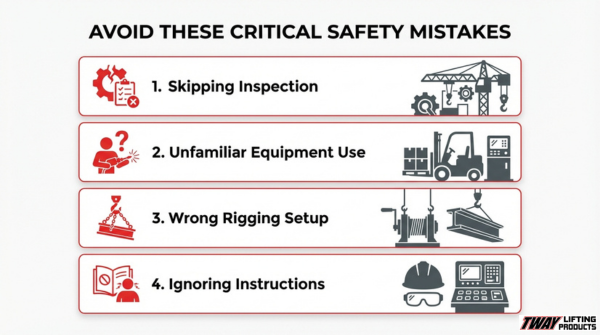
Common safety mistakes when using rented equipment include skipping pre-use inspections, operating unfamiliar machinery, configuring rigging incorrectly, and ignoring manufacturer instructions. Each of these errors introduces preventable risk.
Why Is Skipping a Pre-Use Inspection Dangerous?
Skipping a pre-use inspection is dangerous because it allows hidden defects to go undetected before a load is applied. Cracked welds, worn wire rope, deformed hooks, and leaking hydraulic lines can all exist on equipment that appears functional at first glance. OSHA standard 1926.1412(a) requires that a competent person begin a visual inspection of cranes and derricks prior to each shift, specifically looking for apparent deficiencies. Rental equipment passes through multiple job sites, which increases the likelihood of unreported damage. A five-minute walkaround before each use remains one of the most effective ways to prevent catastrophic failures during lifting operations.
What Are the Risks of Using Unfamiliar Equipment Types?
The risks of using unfamiliar equipment types include misidentifying rated capacities, operating controls incorrectly, and applying the wrong rigging techniques for that specific machine. Every crane, hoist, and sling configuration has unique operating characteristics. A tower crane behaves differently than a rough terrain crane, and synthetic roundslings have different limitations than alloy steel chain slings. Operators who lack hands-on experience with a particular equipment type are far more likely to misjudge load behavior. Before operating any rented machinery, workers should review the operator’s manual and, when possible, complete a supervised familiarization session.
How Does Improper Rigging Configuration Cause Failures?
Improper rigging configuration causes failures by creating unbalanced loads, exceeding sling capacity, or allowing load shifts during a lift. Incorrect shackle placement, mismatched sling types, and poor hitch selection all compromise the integrity of the rigging system. According to LGH, the formula for calculating tension in a single sling leg is load weight divided by the number of sling legs, multiplied by the load angle factor, where a 60-degree angle from horizontal applies a factor of 1.155. Many riggers underestimate how dramatically angle changes affect tension. Even a well-rated sling will fail when configured at an angle that multiplies the actual load beyond its working load limit.
Why Is Ignoring Manufacturer Instructions a Liability?
Ignoring manufacturer instructions is a liability because it eliminates your primary defense in any accident investigation or legal proceeding. Manufacturers publish load charts, inspection intervals, temperature limits, and operational parameters specific to each piece of equipment. When operators deviate from these guidelines, responsibility shifts directly to the user. In the case of United Rentals North America Inc. v. Evans (2020), the court examined how the loading of incorrect equipment was a contributing factor in a fatal crash. Always keep manufacturer documentation on-site, and verify that every operator has reviewed the instructions specific to the rented equipment before work begins.
With these common mistakes identified, proper training ensures workers can recognize and avoid each one.
How Should You Handle Damaged or Defective Rental Equipment?
You should handle damaged or defective rental equipment by immediately removing it from service, tagging it as out of use, and notifying both the rental provider and your site supervisor before any replacement or repair occurs. The steps below cover identification, isolation, and resolution.
When a defect is discovered during a pre-shift visual inspection or mid-operation, the response must be systematic:
- Stop the lift immediately. Any load in progress should be safely secured or lowered before the equipment is fully taken offline.
- Tag and isolate the item. Attach a “Do Not Use” tag to the damaged sling, shackle, hoist, or other component so no other crew member inadvertently puts it back into service.
- Document the damage. Photograph the defect and record specifics: the type of damage, equipment identification number, date, and the conditions under which the defect was found.
- Notify the rental provider. Contact the supplier promptly. Under most rental agreements, the renter must report defects within a defined window to avoid liability for further deterioration.
- Request a competent person evaluation. OSHA defines a competent person as one capable of identifying existing and predictable hazards who has authorization to take prompt corrective measures, per 29 CFR 1926.32(f). This individual should assess whether the item can be repaired on-site or must be returned.
- Arrange replacement equipment. Do not resume lifting operations with compromised gear. Substitute with properly inspected, rated equipment before continuing work.
Failing to pull defective equipment creates cascading risk. In the case of United Rentals North America Inc. v. Evans (2020), the court examined how the loading of incorrect equipment was a contributing factor in a fatal crash, underscoring the legal and human consequences of overlooking equipment problems.
From a practical standpoint, the most common mistake is hesitation. Workers sometimes continue using gear that shows early signs of wear because replacing it means downtime. That short-term thinking invites catastrophic failure. If a wire rope sling shows broken wires, a chain link appears stretched, or a hoist brake feels inconsistent, the correct response is always immediate removal. No deadline justifies operating with defective lifting equipment.
With defective equipment protocols established, proper worker training ensures these procedures are followed consistently on every job site.
What Training Do Workers Need Before Operating Rented Lifts?
Workers need equipment-specific operator training, hazard recognition instruction, and competent person qualification before operating rented lifts. The core areas include OSHA-defined competency, hands-on equipment familiarization, and rigging-specific skills.
OSHA defines a competent person as one who is capable of identifying existing and predictable hazards and who has authorization to take prompt corrective measures to eliminate them, per 29 CFR 1926.32(f). This standard applies regardless of whether equipment is owned or rented. Every worker involved in a lifting operation should understand load charts, rated capacities, and the specific controls of the rented equipment they will use.
Essential training areas before operating rented lifting equipment include:
- Equipment-specific familiarization: Operators must review the manufacturer’s operating manual and complete hands-on orientation for each unfamiliar machine type before use.
- Pre-shift visual inspection procedures: Workers need training on how to identify apparent deficiencies in cranes, hoists, slings, and hardware before each shift.
- Load chart interpretation: Operators must know how to read and apply load charts, including adjustments for boom length, radius, and configuration.
- Rigging fundamentals: Personnel involved in attaching loads need instruction on sling angles, hitch types, and working load limits.
- Signal person communication: Designated signal persons require training on standard hand signals or radio communication protocols used during lifts.
- Hazard recognition and site assessment: All crew members should be trained to identify overhead power lines, unstable ground conditions, and exclusion zone requirements.
Rental equipment often arrives with different controls, capacities, or operational characteristics than what a crew normally uses. Even experienced operators benefit from a structured familiarization session before the first lift. Skipping this step is one of the most common causes of incidents involving rented machinery, because muscle memory from familiar equipment can lead to critical errors on an unfamiliar unit.
For crane operations specifically, third-party evaluation services for operator certification cost between $400 and $500 per person, according to the Washington State Department of Labor & Industries. This investment is modest compared to the liability exposure of placing uncertified personnel on rented cranes.
Training documentation should be maintained on-site throughout the rental period. If OSHA conducts an inspection, the employer must demonstrate that every operator met competency requirements before the equipment was put into service. With training protocols established, professional rental and inspection services add another layer of protection to lifting operations.
How Can Professional Equipment Rental and Inspection Services Improve Lifting Safety?
Professional equipment rental and inspection services improve lifting safety by ensuring every piece of gear meets regulatory standards before it reaches a job site. The following sections cover how Tway Lifting supports job-readiness and the key safety takeaways for renting lifting equipment.
Can Tway Lifting’s Rental and Inspection Services Help Ensure Your Equipment Is Job-Ready?
Yes, Tway Lifting’s rental and inspection services can help ensure your equipment is job-ready. Tway Lifting provides professionally inspected wire rope slings, synthetic slings, shackles, hoists, spreader beams, and load cells through daily, weekly, or monthly rental programs. Each piece undergoes evaluation by certified, factory-trained inspection specialists before delivery.
This level of pre-deployment scrutiny matters because receiving the wrong or uninspected gear carries serious consequences. In the case of United Rentals North America Inc. v. Evans (2020), the court examined how the loading of incorrect equipment was a contributing factor in a fatal crash. Tway Lifting’s inspection protocols, backed by over 75 years of rigging expertise and ISO 9001 certification, are designed to eliminate exactly this type of failure before equipment leaves the facility.
For operations requiring shift-level compliance, Tway Lifting’s inspection reporting also supports the OSHA 1926.1412(a) requirement that a competent person visually inspect cranes and derricks before each shift. Partnering with a rental provider that builds compliance into the process is one of the most effective ways to close the gap between regulatory requirements and field-level execution.
What Are the Key Takeaways About Safety Basics for Renting Lifting Equipment?
The key takeaways about safety basics for renting lifting equipment center on inspection discipline, documentation verification, and proper planning:
- Every rented sling, hoist, shackle, and crane component requires a hands-on pre-use inspection before the first lift of every shift.
- Valid load test certificates, third-party inspection records, and legible identification tags must accompany all rental gear.
- Rated capacity must account for sling angles, environmental conditions, and actual load weight, not assumptions.
- A written lift plan and job hazard analysis are required before any rigging operation begins.
- Workers must receive training specific to the rented equipment type before operating it.
- Damaged or defective rental equipment must be immediately tagged out of service and reported.
According to the National Safety Council, contact with objects and equipment resulted in 756 worker deaths in 2024. Every safety basic covered in this article exists to prevent your team from contributing to that statistic. Tway Lifting, headquartered in Indianapolis with a second superstore in Fort Wayne, supports these fundamentals through professional inspection services, compliant rental equipment, and the technical expertise that comes from manufacturing, selling, and servicing lifting gear since 1945.