





Spreader Bar vs Lifting Beam: When to Use Each One

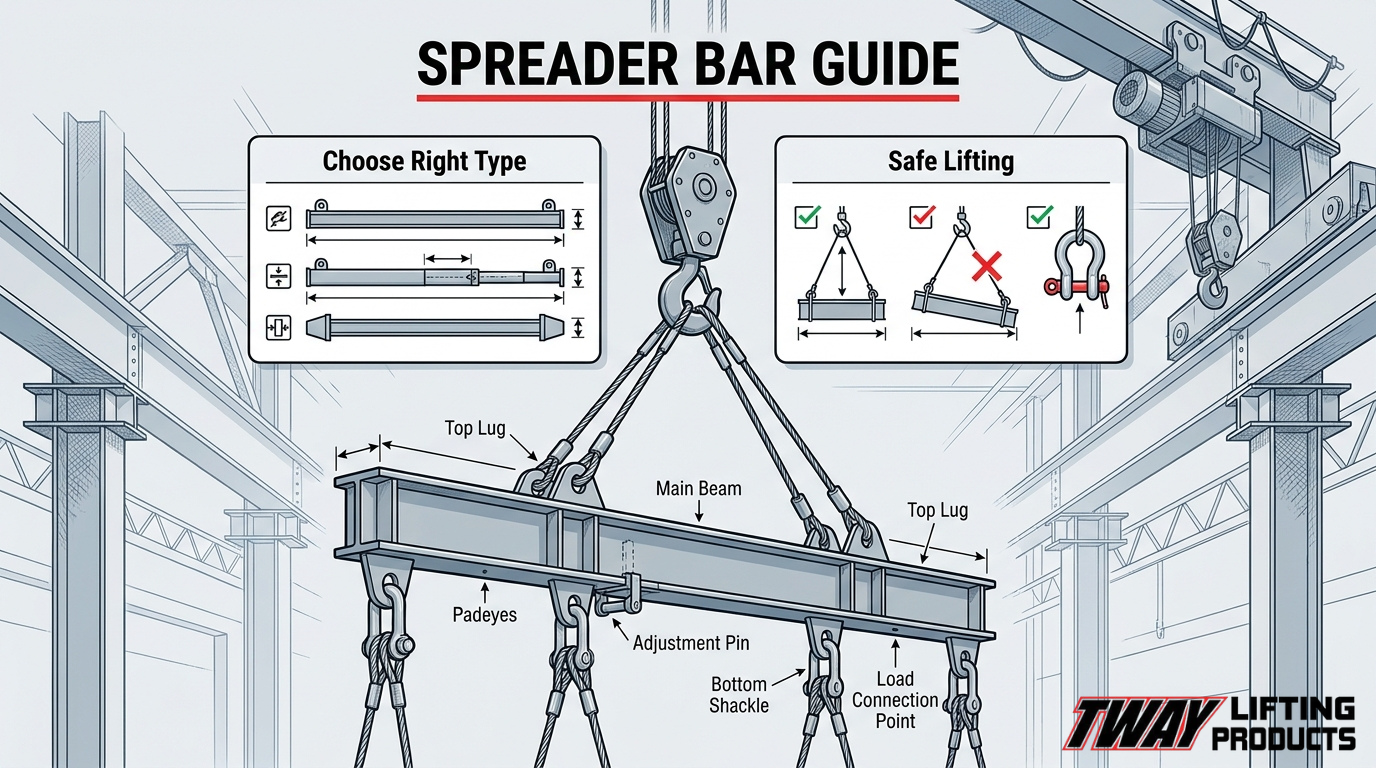
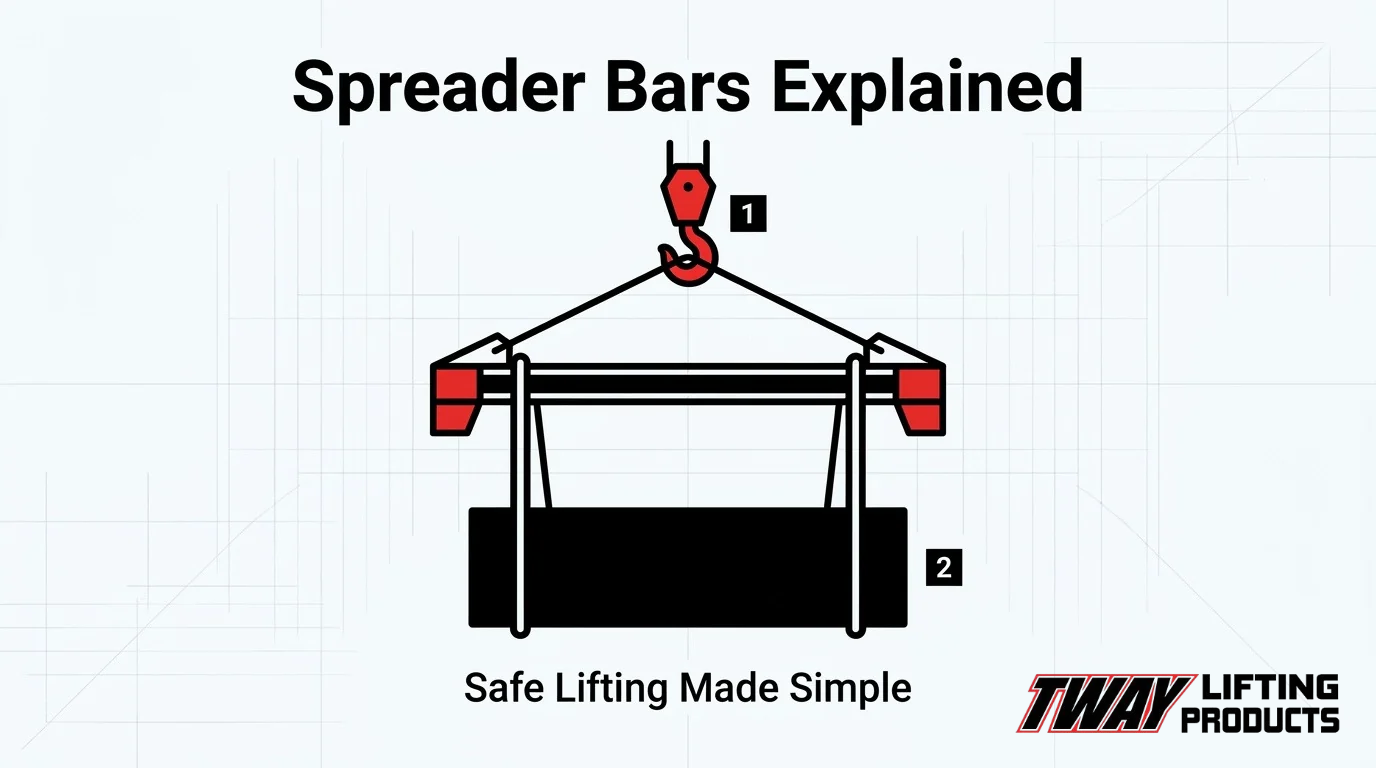
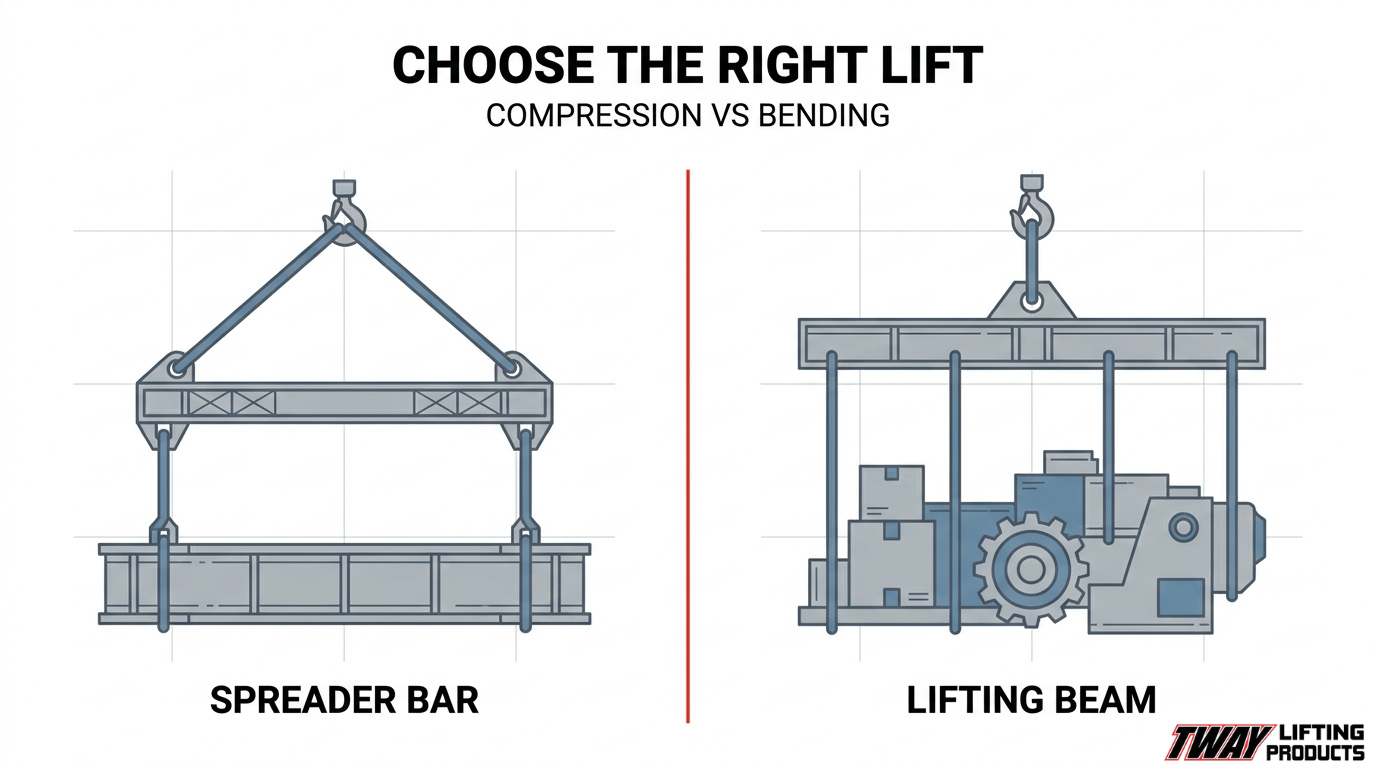
A spreader bar is a below-the-hook lifting device that carries force in compression to keep slings vertical, while a lifting beam hangs from a single bail and carries force in bending. Choosing the right device depends on load geometry, weight distribution, available headroom, and pick-point layout. This guide covers how each device works structurally, the […]

Spreader Bar for Cranes

A spreader bar is a device that assists with lifting heavy objects or loads. It is used adjacent to lifting machines such as cranes, and their role is to spread out the weight better to ensure a safe and effective carry. The spreader bar for cranes works by redistributing the forces that influence the lifts, […]

Types of Spreader Bars: Choose the Right Lift Beam

A spreader bar is a structural device that separates two or more lifting slings to distribute load forces horizontally across multiple attachment points during a crane or hoist lift. It prevents inward compression on the load, controls sling angles, and enables safe hoisting of wide, fragile, or multi-point loads. This guide covers spreader bar types […]

Spreader Bar Uses, Types, and Safety Guidelines

A spreader bar is a horizontal structural member that separates sling attachment points outward from the load, keeping the rigging in compression rather than allowing inward sling forces to crush, tip, or destabilize what is being lifted. Unlike a lifting beam, which connects directly to the crane hook and carries bending forces at its center, […]

How It’s Made: Shade Sail Cables

In this video we show you how we used Crosby WireLock and Crosby Spelter Sockets on 1 1/8″ Galvanized Cable to help create the Shade Sail Structure for the Eiteljorg Museum of American Indians and Western Art The project was designed by architect Jonathan Hess of Browning Day Mullins Dierdorf, who also designed the main […]

How It’s Made Wire Rope Slings

Watch as one of our specially trained wire rope fabricators works on a wire rope sling using the Flemish eye method. After performing the process, it is sealed with a half million pounds then load tested at 150% the working load limit of the sling. Then we finish the process by marking the sling with […]