



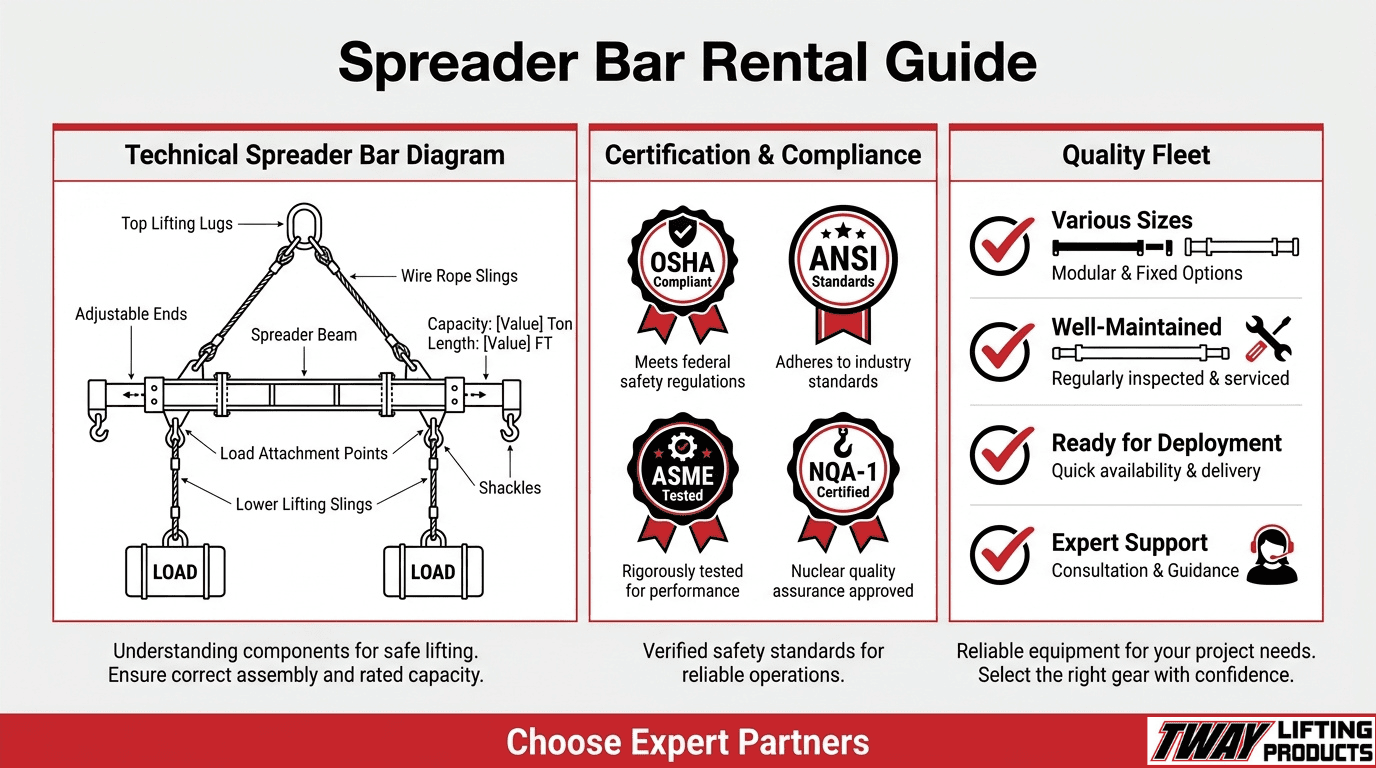

A spreader bar is a below-the-hook lifting device that resists axial compression to spread load and maintain sling angles at or near 90 degrees during overhead lifts. It is classified as rigging equipment under OSHA and ASME standards, which means the rental company supplying it shares direct responsibility for compliance.
This guide covers equipment types and their applications, certifications and compliance requirements, fleet quality evaluation, key questions to ask before committing, pricing structures, red flags to avoid, and how to compare suppliers across the US.
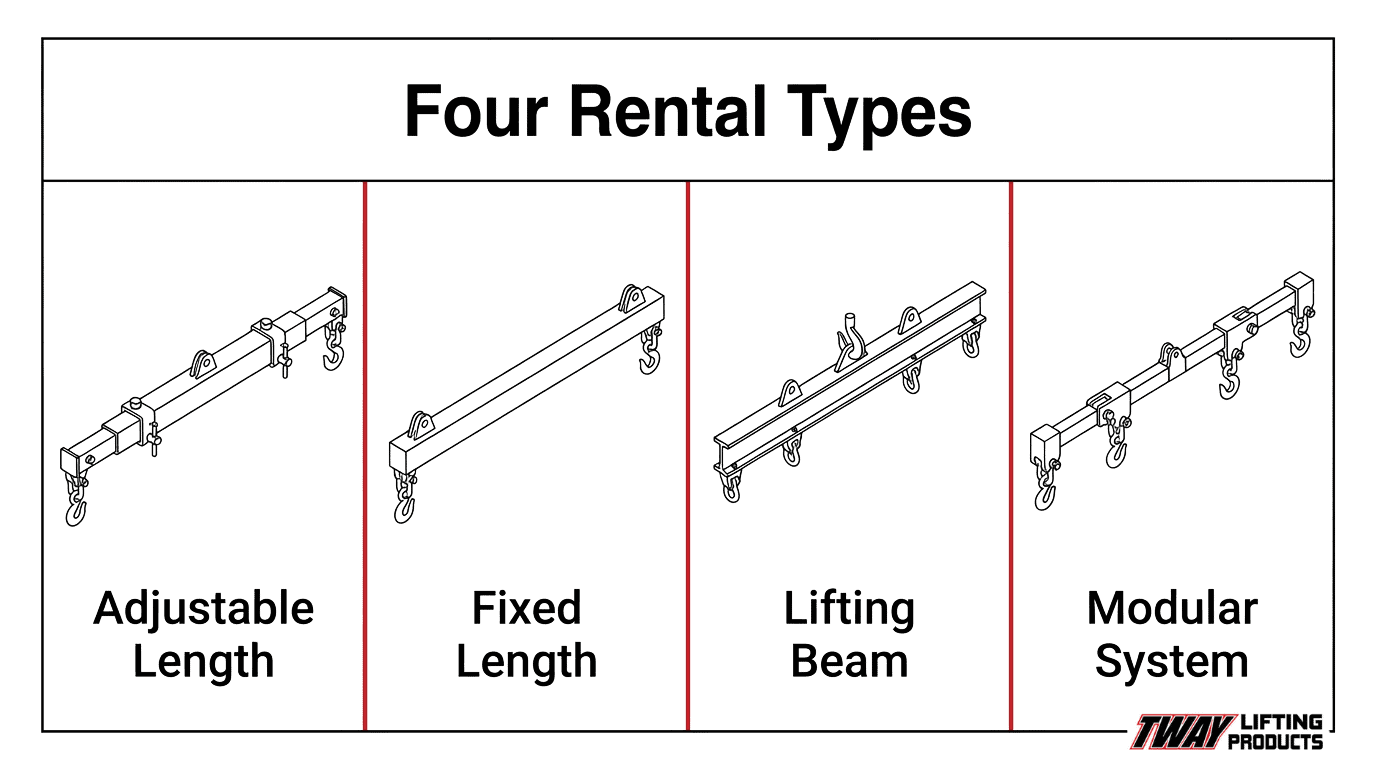
Spreader bars are available in four rental configurations: adjustable, fixed-length, below-the-hook lifting beams, and modular systems. Each suits different load geometries, sling angle requirements, and project scales, and understanding these distinctions is essential before requesting a quote.
Certifications and compliance form the non-negotiable baseline for any rental decision. ASME B30.20-2025, OSHA 29 CFR 1926.251(a)(4), and proof-load test documentation are the specific credentials to verify, alongside NCCCO-recognized competent person inspection records.
Evaluating fleet quality means confirming shift-by-shift inspection logs, Working Load Limit (WLL) ratings matched to your specific configuration, and condition standards set by OSHA and the Specialized Carriers and Rigging Association.
Rental pricing follows duration-based structures with additional fees, including environmental surcharges and transportation charges, that rarely appear in base-rate quotes. Knowing the full fee structure before signing prevents budget overruns on time-sensitive projects.
Comparing national and local suppliers, identifying red flags such as missing proof-load certificates or unmarked WLL ratings, and verifying industry-specific track records are the final steps before selecting a rental partner.
What Is a Spreader Bar and What Is It Used For?
A spreader bar is a lifting device designed to spread the load and reduce sling angles, primarily subjected to compressive forces and axial loading. It is used to stabilize heavy or awkward loads during overhead lifts by keeping lifting slings at or near a 90-degree angle, which prevents damage to both the load and the rigging hardware.
Rigging engineers use spreader bars when planning critical lifts, reviewing equipment lists, and generating lift plans that determine which below-the-hook lifting devices are appropriate for a given project. According to Industrial Training International (ITI), rigging engineers are responsible for selecting cranes and below-the-hook lifting devices during the initial stages of a project.
Spreader bars are also referred to as crane spreaders or load spreaders, though they are technically distinct from lifting beams. A lifting beam is designed to resist bending moments, while a spreader bar resists axial compression, making each device suited to different load configurations and lift geometries.
What Are the Different Types of Spreader Bars Available for Rent?
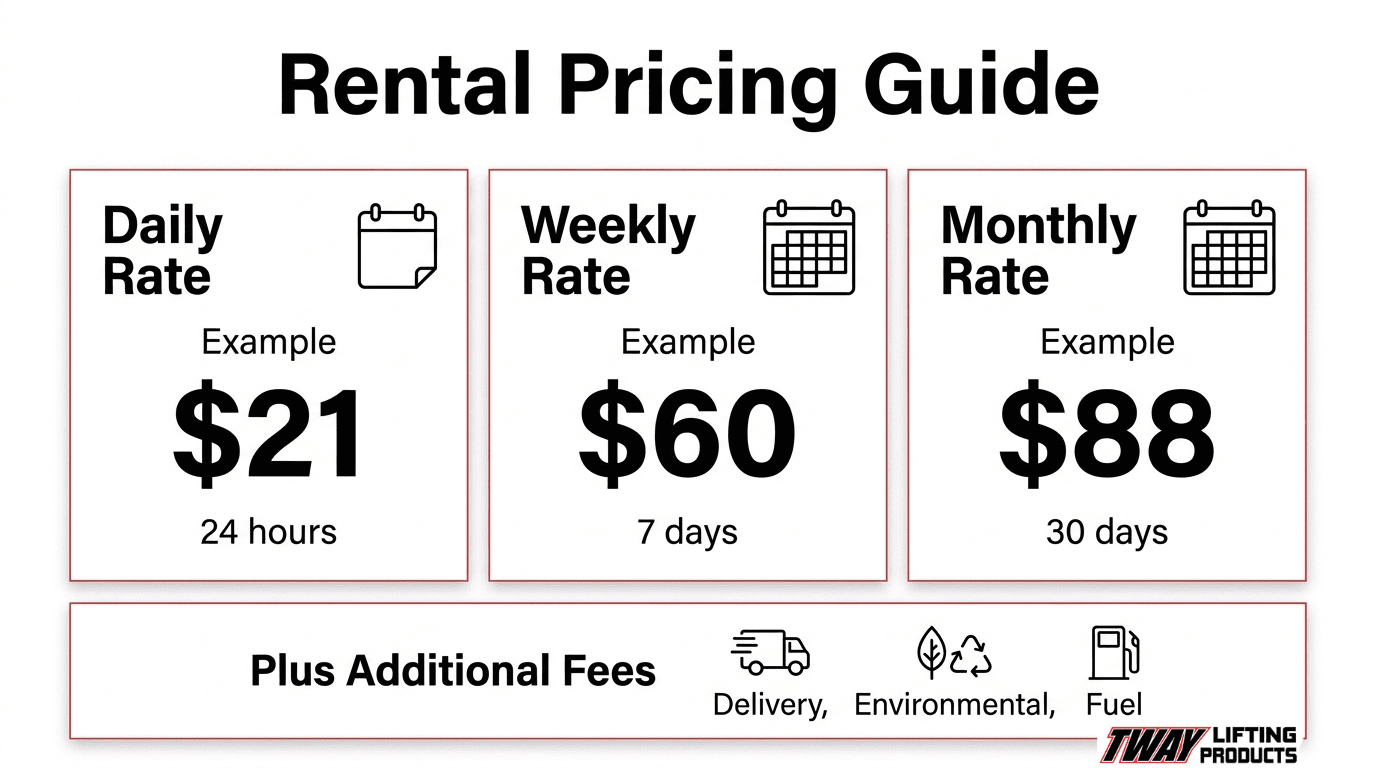
The types of spreader bars available for rent include adjustable bars, fixed-length bars, below-the-hook lifting beams, and modular systems. Each type suits different load configurations, sling angles, and project scales. Government procurement contracts confirm rental pricing for spreader bars at rates such as $21.00 daily, $60.00 weekly, and $88.00 monthly for a 24-inch unit (Washington State Department of Enterprise Services).
Adjustable Spreader Bars
Adjustable spreader bars are spreader bars that allow operators to change the span between attachment points without swapping equipment. This flexibility makes them well suited for projects involving varied load widths or multiple lift configurations on the same job site. Also called crane spreaders or load spreaders, they are distinct from lifting beams, which resist bending stress rather than axial compression. Under OSHA 29 CFR 1926.251(a)(4), all custom-designed lifting accessories must be marked with safe working loads and proof-tested to 125% of rated capacity. The ASME B30.20-2025 standard further governs their marking, construction, and inspection, while DNVGL-ST-0378 and API RP 2T set design methodology for offshore adjustable configurations.
Fixed-Length Spreader Bars
Fixed-length spreader bars are spreader bars built to a single, unchanging span dimension. They are the simplest and most economical rental option, best suited for repetitive lifts involving identical load geometries. Because the attachment points never shift, fixed-length bars offer predictable rigging geometry on every lift, reducing setup time for high-volume operations.
Below-the-Hook Lifting Beams
Below-the-hook lifting beams are mechanical tools that connect a crane hook to a load, with critical applications in marine installations, construction, and heavy equipment transport. Unlike standard spreader bars, lifting beams resist bending moments between suspension and load points rather than axial compression. They stabilize awkward or oversized loads by keeping lifting slings at or near a 90-degree angle, which prevents load damage and reduces stress on rigging hardware. According to Industrial Training International, rigging engineers generate lift plans specifying below-the-hook device selection during a project’s earliest planning stages. Shipbuilding case studies show that spreader beam selection is also guided by production volume and economic feasibility.
Modular Spreader Bar Systems
Modular spreader bar systems are configurable assemblies built from interchangeable subcomponents that allow operators to set custom lengths for specific lifts. By selecting and connecting discrete sections, crews can adapt a single rental inventory to a wide range of load spans without sourcing multiple fixed-length units. This approach reduces dependency on highly technical field personnel, since the configuration logic is built into the subassembly design rather than requiring on-site engineering. Modular systems are particularly cost-effective on projects with changing lift geometries across multiple phases.
Why Does Choosing the Right Spreader Bar Rental Company Matter?
Choosing the right spreader bar rental company matters because equipment failures, compliance gaps, and poor vendor support can cause costly project delays, personnel injuries, and legal liability. The sections below cover certifications, red flags, and compliance requirements that separate reliable suppliers from risky ones.
What Certifications Should a Spreader Bar Rental Company Have?
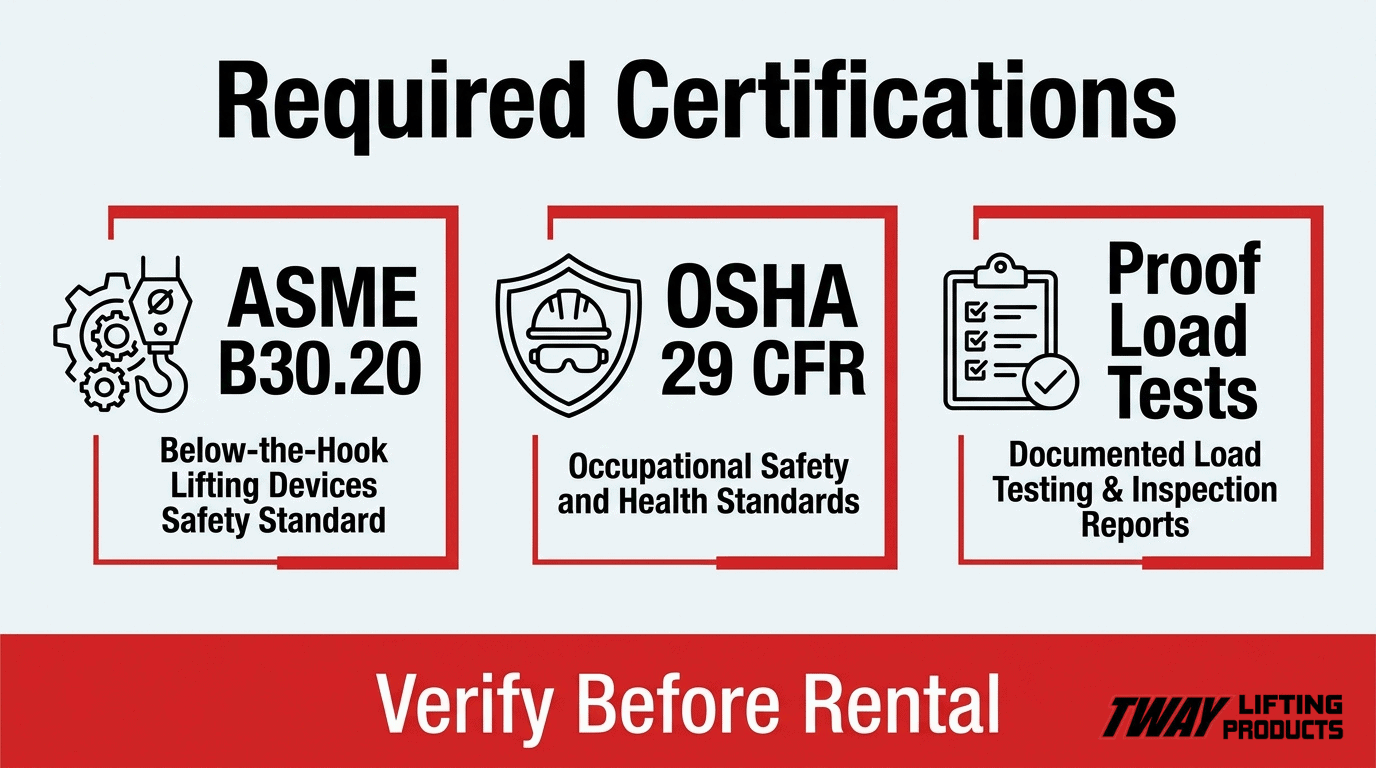
The certifications a spreader bar rental company should have include demonstrated compliance with OSHA standard 29 CFR 1926.251(a)(4), which requires all custom-designed lifting accessories to be proof-tested to 125% of their rated load and marked with safe working loads before use. Reputable rental companies also align with ASME B30.20-2025, the governing standard for below-the-hook lifting devices covering construction, inspection, testing, and operation. According to the National Commission for the Certification of Crane Operators (NCCCO), certified personnel provide the performance standards necessary to support safe lifting operations across all industry segments. Any supplier unable to produce proof-load test certificates or document compliance with these standards should be disqualified immediately.
What Are the Red Flags When Evaluating a Spreader Bar Rental Company?
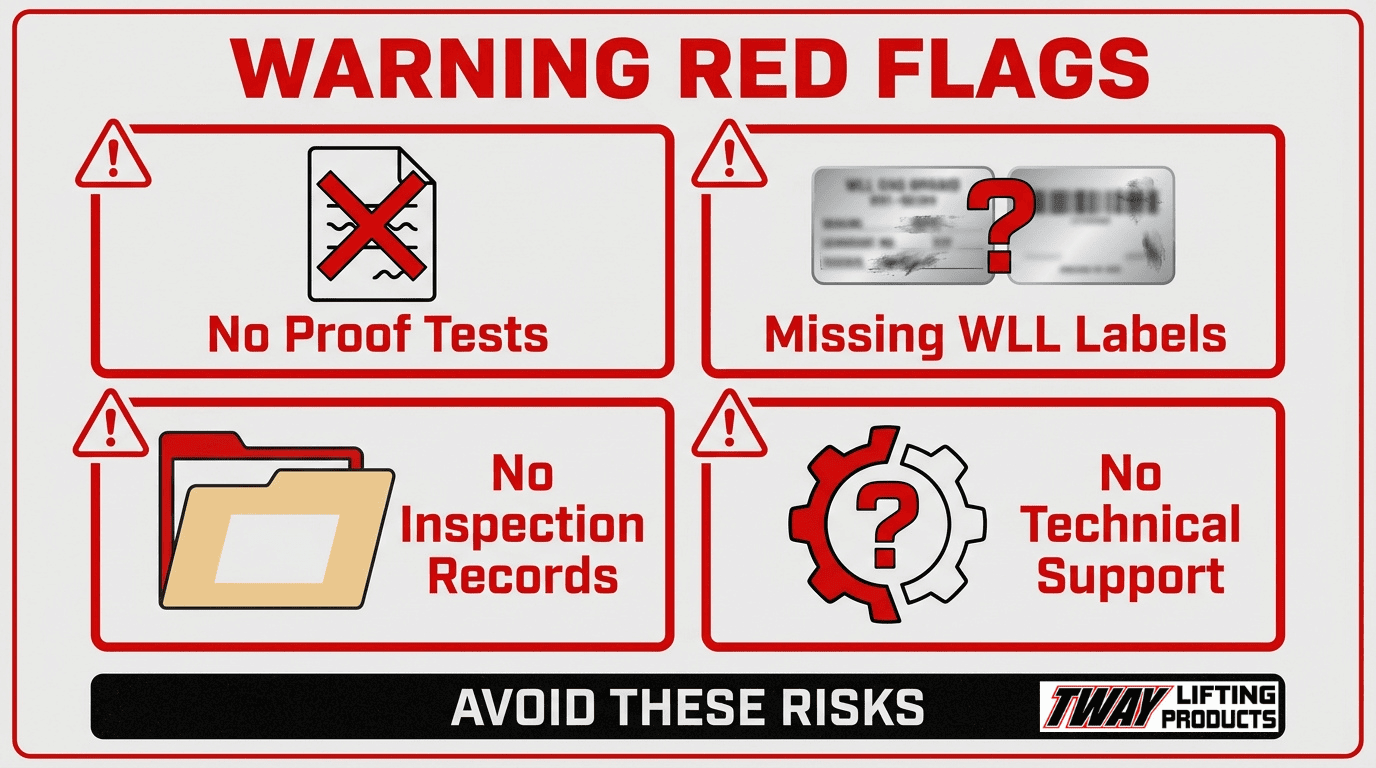
The red flags when evaluating a spreader bar rental company include missing proof-load test certificates, absence of pre-lift planning support, and unverified working load limit markings on equipment. According to Calibration Inc., the absence of documented proof-load testing certificates is a major indicator of non-compliance with safety regulations. Vendors who cannot produce inspection records, certify their rigging staff, or explain how their equipment meets current ASME and OSHA standards represent serious operational and legal risk. A reliable supplier will proactively share documentation without prompting.
What Are the OSHA and Safety Compliance Requirements for Spreader Bar Rentals?
The OSHA and safety compliance requirements for spreader bar rentals center on 29 CFR 1926.251, which mandates proof-testing, load marking, and pre-shift inspection of all rigging equipment by a designated competent person. The Specialized Carriers and Rigging Association (SC&RA) further clarifies that spreader bars are classified as rigging equipment rather than part of the load, which directly affects how OSHA and ISO inspection obligations apply. Any equipment found defective during inspection must be immediately removed from service. In practice, the rental company, not just the end user, shares responsibility for ensuring equipment enters service in a compliant condition.
With compliance requirements and red flags clearly defined, the next step is verifying equipment condition and load capacity ratings firsthand.
What Certifications Should a Spreader Bar Rental Company Have?
The certifications a spreader bar rental company should have include ASME B30.20 compliance, OSHA regulatory adherence, and documented proof-load testing for all below-the-hook lifting devices. The following sub-sections cover the specific standards, inspection credentials, and compliance requirements to verify before signing a rental agreement.
ASME B30.20 and OSHA 29 CFR 1926.251 Compliance
ASME B30.20 compliance is the foundational certification standard for any company renting spreader bars. The ASME B30.20-2025 standard addresses the marking, construction, installation, inspection, testing, maintenance, and operation of below-the-hook lifting devices, including adjustable and modular spreader bars, according to the American National Standards Institute.
Alongside ASME compliance, OSHA standard 29 CFR 1926.251(a)(4) mandates that spreader bars be marked with safe working loads and proof-tested to 125 percent of their rated load before use. Any rental company unable to produce documentation confirming both requirements should be disqualified from consideration.
Proof-Load Testing Certificates
Proof-load testing certificates are documents that verify a spreader bar has been physically tested to its rated capacity under controlled conditions. According to Calibration Inc., the absence of proof-load test certificates is a major red flag indicating non-compliance with safety regulations.
Reputable rental companies retain these certificates per individual piece of equipment and make them available upon request. Without traceable test records, there is no verifiable basis for trusting the stated Working Load Limit.
NCCCO and Competent Person Inspection Credentials
NCCCO credentials confirm that inspection personnel meet recognized performance standards for lifting equipment. The National Commission for the Certification of Crane Operators provides performance standards that assist all segments of the industry in safe operation, including the inspection and certification of lifting devices.
Rental companies should employ or contract certified inspectors who qualify as a “competent person” under OSHA definitions. Inspection credentials should be current, verifiable, and tied to the specific equipment types in the rental fleet.
How Do You Evaluate the Equipment Quality of a Rental Fleet?
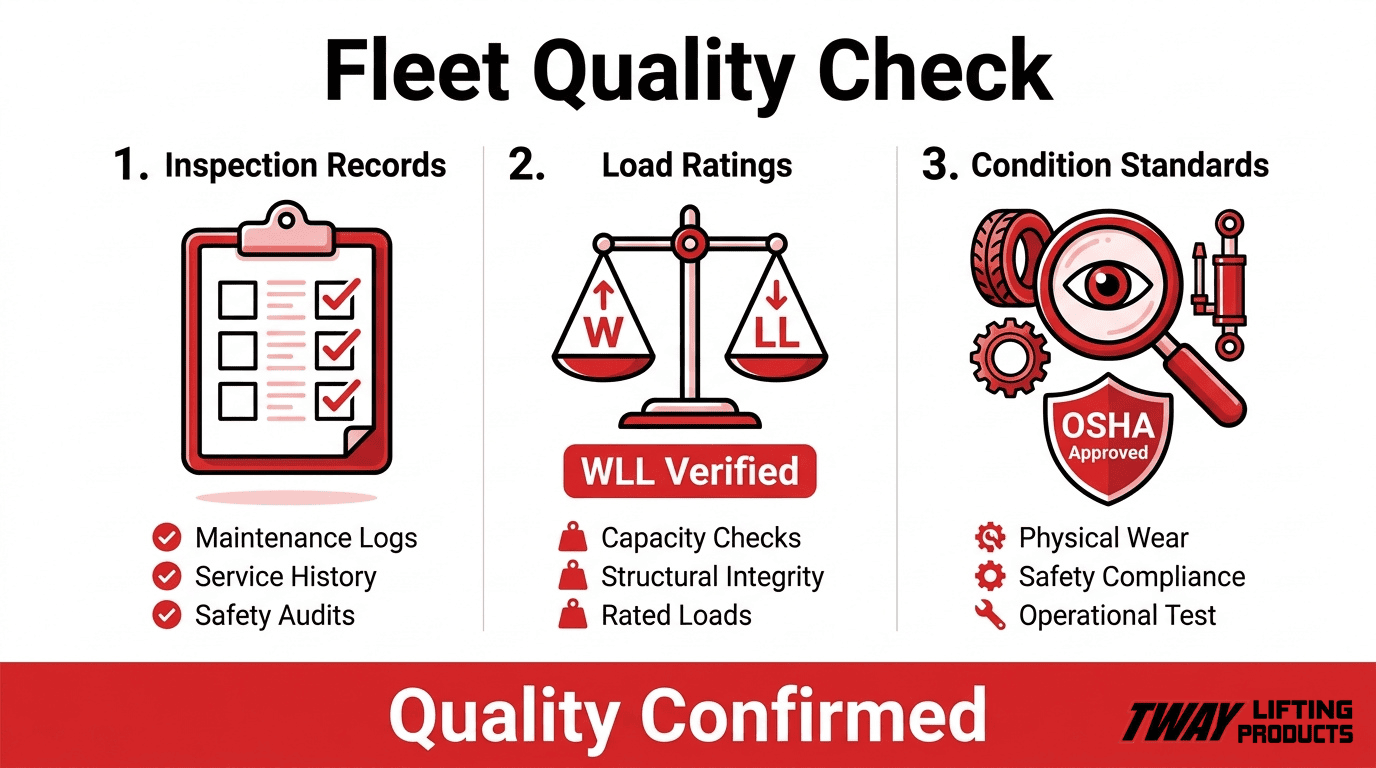
Evaluating rental fleet quality requires verifying inspection records, confirmed load capacity ratings, and condition standards before any lift. The following H3s cover each of these three checkpoints in detail.
How Do You Know If a Spreader Bar Has Been Properly Inspected?
A properly inspected spreader bar has documented shift-by-shift inspection records completed by a designated competent person. According to CDC/NIOSH guidance on rigging equipment for material handling, any defective equipment must be immediately removed from service after each pre-use inspection. When reviewing a rental company’s fleet, ask for written inspection logs and proof-load test certificates. The absence of these documents signals non-compliance with OSHA and ASME requirements. Reputable suppliers should provide both without hesitation.
What Load Capacity Ratings Should You Verify Before Renting?
The load capacity ratings to verify before renting are the Working Load Limit (WLL) and the configuration-specific rated capacity for your intended lift. WLL has been formally adopted by ISO, EN, and ASME standards to replace the older term Safe Working Load (SWL), eliminating ambiguity in lifting equipment capacity ratings. Expert rigging consultation is required for critical lifts to confirm that the spreader bar’s rated capacity at its intended configuration exceeds the calculated load weight. Always match the WLL to your specific sling angle and load geometry, not just the bar’s maximum rating.
What Condition Standards Should Rental Equipment Meet?
Rental spreader bars must meet condition standards set by OSHA, ASME B30.20, and industry bodies including the Specialized Carriers and Rigging Association (SC&RA), which classifies spreader bars as rigging equipment rather than load, directly affecting how inspection obligations apply. The National Commission for the Certification of Crane Operators (NCCCO) provides performance standards that assist the industry in establishing safe operation benchmarks for inspection and certification of lifting equipment. Physically, rental equipment should be free of visible deformation, corrosion, and mechanical wear. With inspection records, WLL verification, and condition benchmarks all confirmed, a rental fleet demonstrates the quality controls that protect personnel and project timelines.
What Questions Should You Ask a Spreader Bar Rental Company Before Committing?
The questions you should ask a spreader bar rental company cover lift requirements, equipment availability, and technical support. Each of these areas directly affects safety, scheduling, and project cost control.
How Do You Confirm the Company Understands Your Lift Requirements?
To confirm the company understands your lift requirements, ask them to review your load weight, lift geometry, and rigging configuration before quoting any equipment. A knowledgeable vendor should request the load’s center of gravity, attachment point spacing, and whether the lift is critical or routine. If a company quotes equipment without asking these questions first, that is a significant warning sign. Vendors with genuine engineering depth will also confirm that the spreader bar’s rated capacity at your intended span exceeds the calculated load weight, not just the nominal WLL stamped on the bar.
How Do You Ask About Lead Times and Equipment Availability?
To ask about lead times and equipment availability, request specific delivery windows, not estimates, and confirm whether the exact bar configuration you need is in stock or requires sourcing. Availability questions matter more than most renters realize. According to research published by Allianz Versicherungs-AG, improper equipment selection and the absence of pre-lift planning lead to disproportionately high repair costs and increased accident liability. Rushing a rental decision because a vendor cannot commit to a delivery date creates exactly that risk. Ask directly: “Is this specific bar available on my project start date, and what happens if it is not?”
How Do You Find Out If Technical Support Is Included With the Rental?
To find out if technical support is included with the rental, ask the company whether a rigging specialist or application engineer is available to assist with lift plan review, on-site setup questions, or configuration adjustments during the rental period. Not all vendors offer this, and the gap between those that do and those that do not is widening. The crane and lifting equipment rental market is projected to grow from $50.54 billion in 2025 to $53.76 billion in 2026, according to Yahoo Finance, reflecting intense demand that can stretch vendor support capacity thin. Companies like Tway Lifting, with certified, factory-trained riggers on staff, are better positioned to provide that support when it matters most.
How Does Spreader Bar Rental Pricing Work?
Spreader bar rental pricing works through a combination of duration-based rates, equipment size, and additional contractual fees. The sections below cover short-term costs, long-term project rates, and hidden fees to watch for in rental agreements.
How Much Does It Cost to Rent a Spreader Bar for a Short-Term Job?
Short-term spreader bar rental cost varies by equipment size and rental period. Daily and weekly rates are the most common billing structures for brief jobs. Government procurement benchmarks offer a useful baseline: a 24-inch spreader bar is priced at $21.00 daily and $60.00 weekly, according to Washington State Department of Enterprise Services contract data. Larger capacity bars with higher WLL ratings command proportionally higher rates. For industrial-grade equipment in the 2-to-100-ton range, expect daily rates to scale significantly beyond entry-level figures.
How Much Does Long-Term or Project-Based Spreader Bar Rental Cost?
Long-term spreader bar rental cost is typically structured on a monthly billing cycle, offering lower per-day rates than short-term agreements. Using the same government benchmark, a 24-inch spreader bar carries a monthly rate of $88.00, compared to $60.00 weekly. For multi-week or multi-month projects, rental companies often negotiate custom project rates that bundle delivery, pickup, and equipment swaps. Monthly billing is generally the most cost-effective structure for ongoing construction, utility, or industrial lifting operations.
What Additional Fees Should You Watch for in a Rental Agreement?
The additional fees to watch for in a rental agreement include environmental fees, damage waivers, fuel surcharges, and transportation charges. These costs are rarely listed prominently in base-rate quotes. According to Vermont Department of Buildings and General Services contract documentation, environmental fees can be calculated as a percentage of the total rental cost, such as 1.84% not to exceed $99 per invoice. Reviewing the full fee schedule before signing protects against budget overruns. From an expert standpoint, requesting an itemized quote upfront is the single most effective way to expose hidden charges before they appear on an invoice.
What Are the OSHA and Safety Compliance Requirements for Spreader Bar Rentals?
The OSHA and safety compliance requirements for spreader bar rentals center on proof testing, load marking, and pre-use inspection under federal rigging standards. The key rules span equipment marking, structural testing, and ongoing inspection protocols.
What Does OSHA Require for Spreader Bar Use on Job Sites?
OSHA standard 29 CFR 1926.251(a)(4) requires that custom-designed lifting accessories, including spreader bars, be marked to indicate their safe working loads and proof-tested to 125 percent of their rated load before use. This means any rental spreader bar must arrive with documentation confirming that proof test has been completed. Without it, the equipment cannot legally be deployed on a US job site.
What Is the ASME B30.20 Standard and Why Does It Apply to Rentals?
ASME B30.20-2025 is the governing standard for below-the-hook lifting devices, covering marking, construction, inspection, testing, maintenance, and operation. According to the American National Standards Institute, the 2025 revision includes new provisions specifically for adjustable and modular spreader bars. Rental companies supplying these configurations must demonstrate their equipment complies with the updated standard.
How Often Must Rented Spreader Bars Be Inspected?
Rigging equipment for material handling must be inspected by a designated competent person prior to use on each shift, and any defective equipment must be immediately removed from service, per CDC/NIOSH guidance. For rented spreader bars, this shifts responsibility onto the end user on site, though the rental supplier bears responsibility for delivering equipment in a serviceable condition with current inspection records intact.
What Are the Red Flags When Evaluating a Spreader Bar Rental Company?
The red flags when evaluating a spreader bar rental company include missing proof-load test certificates, no documented inspection records, vague WLL markings, and an inability to answer technical questions about lift configurations.
No Proof-Load Test Certificates
No proof-load test certificates is one of the most serious red flags in spreader bar rental. According to Calibration Inc., documented proof-load testing is a critical requirement for lifting equipment, and the absence of these certificates indicates direct non-compliance with safety regulations.
Any credible rental company should produce test documentation on request, without hesitation.
No Pre-Lift Planning or Technical Guidance
The absence of pre-task planning is a documented red flag in lifting operations, linked to toppled loads and personnel injury, according to a U.S. Department of Energy report. A rental company that cannot discuss load weight, sling angles, or configuration requirements is not equipped to support a safe lift.
Unclear or Missing WLL Markings
Spreader bars with missing or illegible WLL markings signal inadequate maintenance practices. OSHA standard 29 CFR 1926.251(a)(4) requires that all custom lifting accessories be clearly marked with their safe working loads. A rental fleet without proper markings fails this basic compliance threshold.
No Inspection Records on File
Rigging equipment must be inspected by a competent person before each shift, per CDC/NIOSH guidance, and any defective equipment must be immediately removed from service. A rental company that cannot provide current inspection records for a specific bar has not met this standard.
How Do You Compare Spreader Bar Rental Companies Across the US?
Comparing spreader bar rental companies across the US requires evaluating fleet size, geographic reach, industry experience, and documented safety records. The sections below cover how to assess national versus local suppliers and how to verify a company’s track record.
How Do You Evaluate a National Rental Company vs. a Local Supplier?
Evaluating a national rental company versus a local supplier depends on your project’s scope, timeline, and location requirements. According to a study published in the American Economic Journal: Microeconomics, national rental companies offer larger fleets and broader geographic coverage, whereas local suppliers often specialize in regional availability and form a middle link in the domestic distribution chain.
For most industrial lifting projects, the right choice comes down to one practical question: can the supplier put certified equipment on your job site on time? National companies typically win on inventory depth; local suppliers often win on responsiveness and regional relationships.
Key factors to compare include:
- Fleet size: National suppliers carry a wider variety of spreader bar capacities and configurations.
- Geographic reach: National companies service multi-site or out-of-state projects more reliably.
- Regional expertise: Local suppliers may offer faster delivery and stronger familiarity with regional compliance requirements.
- Turnaround time: Local suppliers can often provide same-day or next-day availability for urgent lifts.
How Do You Check a Company’s Track Record in Your Industry?
Checking a company’s track record in your industry means reviewing its documented history with projects that match your load type, lift environment, and compliance requirements. A supplier that has successfully supported steel production, construction, or utility infrastructure lifts carries measurably lower risk than one with no documented experience in your sector.
The most reliable indicators of a strong track record include:
- Industry-specific references: Request contacts from clients in your sector who can confirm the supplier’s equipment quality and responsiveness.
- Documented lift history: Ask whether the company has supported critical lifts, including multi-point or non-symmetrical load configurations.
- Certifications on file: Confirm that inspection records, proof-load test certificates, and compliance documentation are current and readily available.
- Longevity in the market: Suppliers with decades of continuous operation have survived the scrutiny of repeat industrial clients, which is a credibility signal that marketing alone cannot replicate.
How Can Tway Lifting’s Rental and Rigging Services Support Your Spreader Bar Needs?
Tway Lifting’s rental and rigging services support spreader bar needs through certified inspection, proof-load documentation, and decades of hands-on rigging expertise. The sections below cover rental capabilities and key selection takeaways.
Does Tway Lifting Offer Spreader Bar Rentals With Certified Inspection and Support?
Yes, Tway Lifting offers spreader bar rentals with certified inspection and support. The company provides spreader beams ranging from 2 to 100 tons and up to 40 feet, alongside telescopic adjustable-length bars, backed by OSHA-compliant inspection services performed by certified specialists.
A spreader bar is a lifting device designed to spread the load and reduce sling angles, primarily subjected to compressive forces and axial loading. Tway Lifting’s rental fleet meets this engineering requirement directly, with each unit accompanied by documented proof-load testing. According to Calibration Inc., the absence of proof-load certificates is a major red flag indicating non-compliance with safety regulations. Free local delivery and pickup further reduce logistical friction for procurement managers coordinating time-sensitive lifts.
What Are the Key Takeaways for Choosing the Right Spreader Bar Rental Company?
The key takeaways for choosing the right spreader bar rental company center on four non-negotiable criteria:
- Verified certifications: Confirm the supplier holds current proof-load test records and OSHA-compliant inspection documentation before any lift begins.
- Engineering support: Select a company whose staff can validate that the spreader bar’s rated capacity at its intended configuration exceeds the calculated load weight, especially for non-symmetrical loads.
- Equipment range: Prioritize suppliers offering both fixed and adjustable spreader bars across a wide WLL range to match your specific lift geometry.
- Transparent pricing: Review rental agreements for environmental fees and accessory charges before committing.
Tway Lifting combines manufacturing, sales, rental, and inspection under one roof, making it a practical single-source partner for rigging teams who need verified equipment without the compliance risk of an unvetted fleet.