


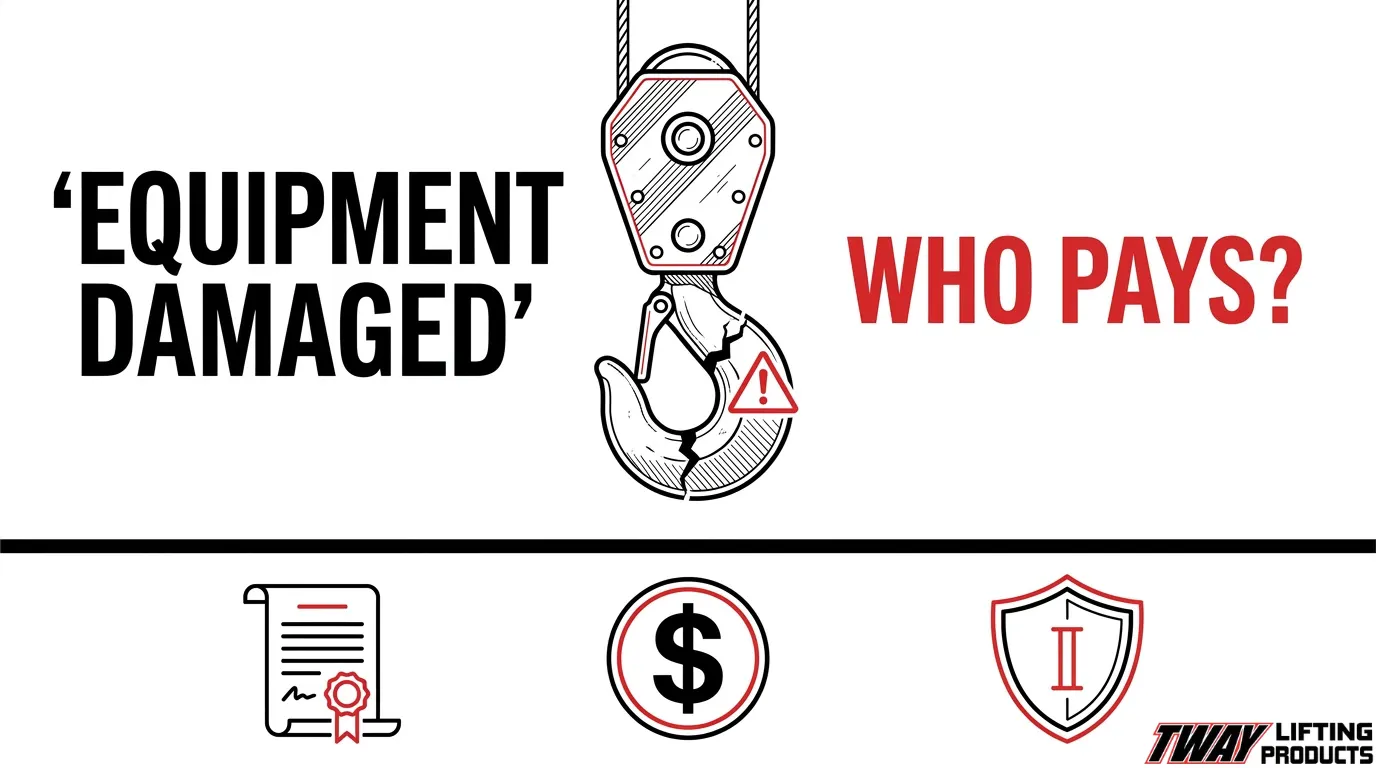

When rental equipment is damaged, the renter typically bears default financial responsibility under the rental contract, though liability can shift based on equipment condition, contract terms, and how the damage occurred.
This guide covers who is actually liable when damage happens, what rental contracts require, how damage costs are calculated, what insurance actually covers, and how to prevent damage before it starts.
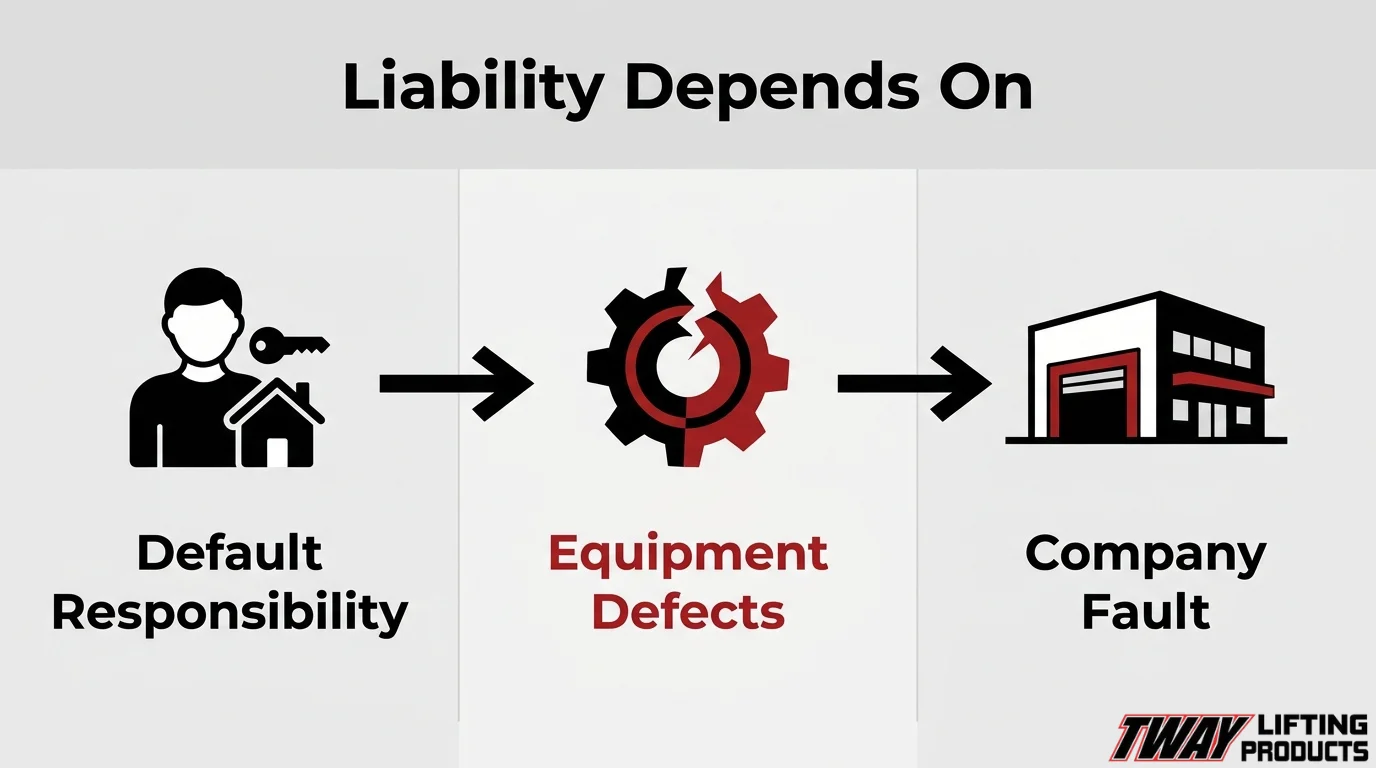
Liability is rarely absolute. Rental contracts assign default responsibility to the renter, but defective equipment, undisclosed pre-existing conditions, and improper maintenance by the rental company can each shift that burden. Understanding where that line falls before signing is essential.
Contract language governs almost everything. Damage clauses, loss-damage waivers, reporting obligations, and return condition standards vary by provider and directly determine what a renter owes when something goes wrong.
Damage type determines cost. Normal wear and tear, accidental damage, negligent misuse, and theft each carry different financial consequences, ranging from no charge to full replacement value.
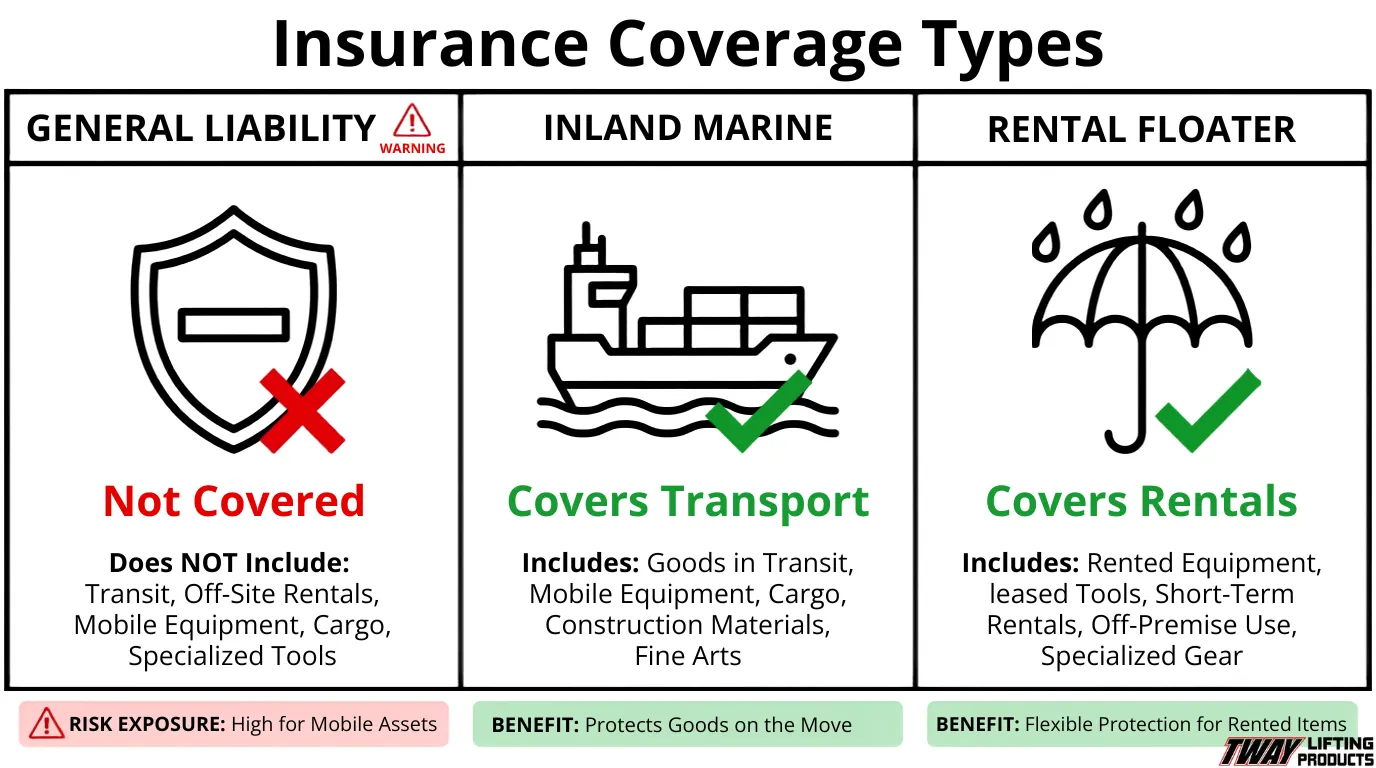
Insurance gaps are common. General liability policies rarely cover physical damage to rented equipment; inland marine coverage and rental equipment floaters are the policies that actually apply.
Prevention is practical. Pre-use inspections, OSHA-mandated operator training, and awareness of the most common failure points address the majority of damage incidents before work begins.
Who Is Responsible When Rental Equipment Gets Damaged?
Responsibility for damaged rental equipment depends on the circumstances, the rental contract, and whether the equipment was in proper working condition when rented. The following sections cover renter liability defaults, defect-based liability shifts, and rental company responsibility.
Is the Renter Always Liable for Damaged Rental Equipment?
The renter is not always liable for damaged rental equipment, though rental contracts typically assign default responsibility to the renter during the rental period. Most agreements require the renter to return equipment in the same condition it was received, excluding normal wear and tear. Liability can shift when defects, inadequate maintenance by the rental company, or third-party actions contributed to the damage. Reviewing the contract’s damage clause before signing is the single most important step a renter can take to understand their exposure.
Does Liability Shift If the Equipment Was Already Defective?
Liability can shift to the equipment rental company if the equipment was already defective at the time of rental. Under UCC Article 2A, the Cornell Law School’s Legal Information Institute confirms that a lessor who is a merchant impliedly warrants that goods are merchantable and fit for their ordinary purpose. If pre-existing defects caused or contributed to the damage, the renter may have grounds to dispute full liability. Courts have also weighed manufacturer responsibility in equipment damage cases, as seen in New York Court of Appeals rulings where manufacturer liability was remanded for retrial when prior jury instructions were deemed incompatible with governing precedent.
Can an Equipment Rental Company Be Held Responsible for Damage?
Yes, an equipment rental company can be held responsible for damage when the equipment it provided was defective, improperly maintained, or unfit for its intended use. Rental companies carry an implied duty to provide merchantable equipment, and failing that standard can expose them to liability claims. Responsibility may also shift to the rental company if it misrepresented the equipment’s condition or failed to disclose known defects before rental. Understanding this shared liability landscape is essential before accepting any rental agreement.
What Do Rental Agreements Say About Equipment Damage?
Rental agreements establish the renter’s financial and legal obligations when equipment is damaged. The sub-sections below cover standard damage clauses, loss-damage waivers, and the consequences of returning equipment without reporting damage first.
What Damage Clauses Are Typically Found in Rental Contracts?
Damage clauses in rental contracts typically assign full financial responsibility to the renter for any loss, harm, or destruction occurring during the rental period. Most contracts include provisions covering prompt damage reporting, repair cost liability, technician labor charges, and replacement fees. According to New Mexico State University Information Technology’s rental terms, “full responsibility for the equipment rests with the undersigned renter,” and any damages must be promptly reported so technicians can assess repair or replacement costs upon return. Beyond cost assignment, many contracts also specify inspection procedures, return condition standards, and consequences for unreported damage. Reading every clause before signing is essential, as financial exposure can extend well beyond the cost of a single repair.
What Is a Damage Waiver in a Rental Agreement?
A damage waiver in a rental agreement is a merchant’s agreement not to hold a customer liable for loss from all or part of any damage to rented equipment. Under Texas Business and Commerce Code, Chapter 93, a merchant may not impose or require the purchase of a heavy equipment loss-damage waiver as a condition of entering into a rental agreement. Waivers typically come at an added cost and vary significantly in what they cover, often excluding theft, negligence, and operator misuse. Renters should review waiver terms carefully rather than assuming full protection is included.
What Happens If You Return Equipment Damaged Without Reporting It?
Returning damaged equipment without prior notification typically results in the full repair or replacement cost being charged to the renter, with no opportunity to dispute the damage assessment before charges are issued. Most rental agreements require prompt reporting as a contractual condition; failing to comply removes any protection the renter might otherwise have had to negotiate costs or involve their insurer. Unreported damage may also be treated as a contract breach, exposing the renter to additional penalties. Proactively reporting damage, however minor it appears, is the most effective way to limit financial liability and preserve a working relationship with the rental provider.
What Types of Damage Are Covered Under Rental Equipment Policies?
Rental equipment policies divide damage into four categories: normal wear and tear, accidental damage, negligent or misuse damage, and theft or total loss. Each category carries different financial consequences for the renter.
What Is Considered Normal Wear and Tear on Rental Equipment?
Normal wear and tear on rental equipment is the gradual, expected degradation that occurs through standard, intended use over time. Examples include minor surface scratches, faded markings, and slight cable fraying from routine operation. The IRS distinguishes this explicitly from casualty losses, noting that “a casualty doesn’t include normal wear and tear or progressive deterioration.” Because wear and tear reflects the equipment’s natural aging, rental companies absorb these costs and do not charge renters for them. Understanding this boundary protects renters from disputing legitimate damage claims at return.
What Counts as Accidental Damage to Rental Equipment?
Accidental damage to rental equipment is unintentional physical harm caused by a sudden, unexpected event during authorized use. Common examples include a dropped load cracking a spreader beam, a vehicle collision with a hoist, or a wire rope sling struck by falling debris. This damage category typically falls outside normal wear and tear, meaning the renter bears financial responsibility unless a loss damage waiver or insurance policy applies. Prompt reporting is essential; delaying notification after an accidental incident can complicate insurance claims and increase overall repair costs.
What Is Considered Negligent or Misuse Damage on a Rental?
Negligent or misuse damage on a rental is harm caused by operating equipment outside its rated capacity, ignoring safety protocols, or using it for unintended purposes. Examples include overloading a chain sling beyond its working load limit, using a hoist in an environment it was not rated for, or allowing an uncertified operator to run the equipment. This damage category carries the highest financial exposure for renters because most rental contracts and loss damage waivers explicitly exclude coverage for misuse. In practice, misuse damage is the category most likely to trigger full replacement charges rather than repair costs.
What Happens If Rental Equipment Is Stolen or Totally Lost?
If rental equipment is stolen or totally lost, the renter is typically responsible for the full replacement value of the equipment. According to the National Insurance Crime Bureau, recovered construction equipment in a documented theft case was valued at approximately $185,000, illustrating the significant dollar exposure renters face when a total-loss event occurs. Inland marine insurance, which covers equipment while in transit or on a job site, is the most common policy type used to offset theft liability. Renters should verify their coverage before taking possession of high-value lifting or rigging equipment.
How Is the Cost of Rental Equipment Damage Calculated?
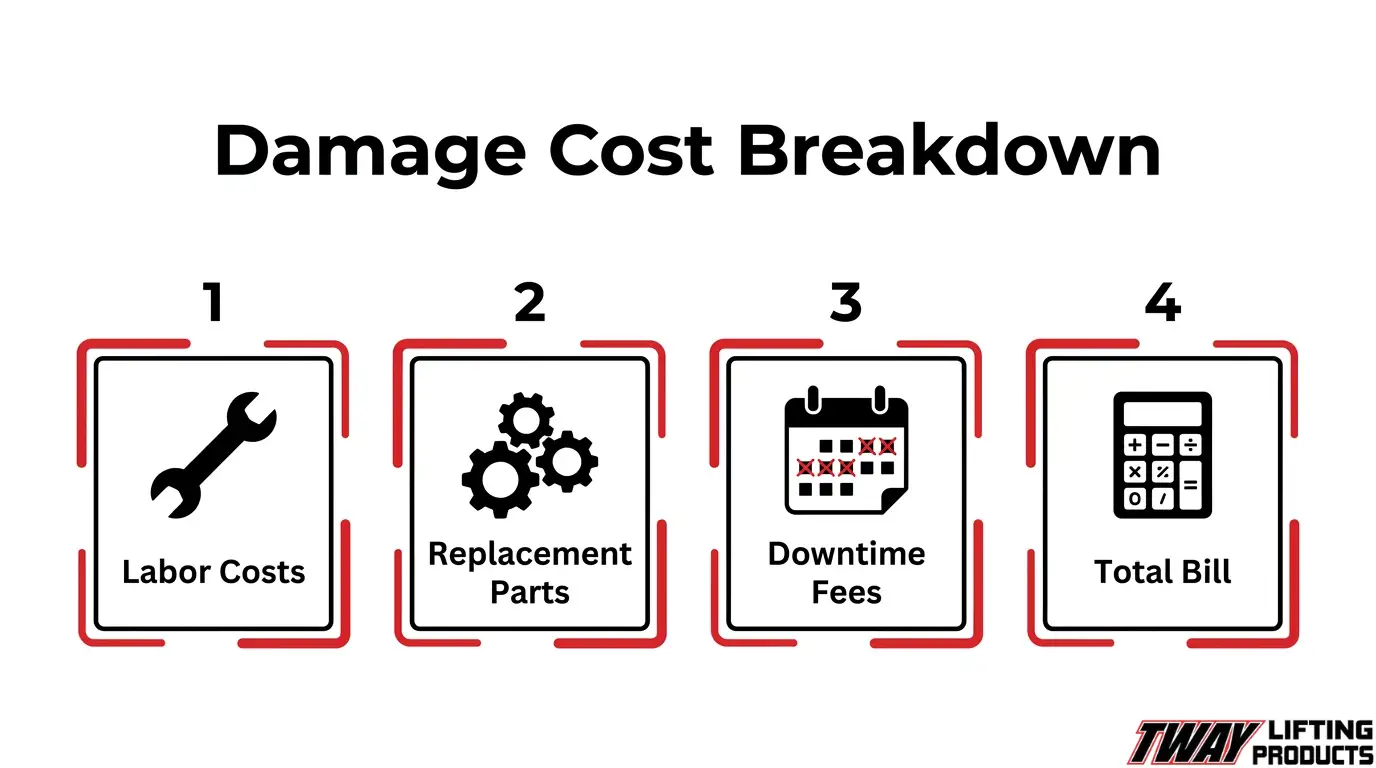
Rental companies calculate damage costs by assessing repair labor, parts, depreciated value, and lost rental revenue during downtime. The sections below cover how repair assessments work, whether renters pay for idle time, and when replacement value can be charged.
How Do Rental Companies Assess Repair Costs for Damaged Equipment?
Rental companies assess repair costs by combining technician labor, replacement parts, and an inspection of the equipment’s pre-damage condition. Most companies document damage at return using pre-rental condition reports as the baseline, then generate a repair estimate from a certified technician. The National Institute for Occupational Safety and Health (NIOSH) recommends conducting safety equipment inspections as a standard practice, which reflects the same inspection discipline rental companies apply when evaluating returned assets. Costs typically include:
- Technician labor hours at the company’s posted rate
- OEM or equivalent replacement parts
- Freight or handling fees for specialized components
- Administrative processing fees
Inspections conducted at return are the most defensible record a rental company has, making pre-rental documentation equally critical for renters.
Are Renters Charged for Downtime While Damaged Equipment Is Repaired?
Yes, renters are commonly charged for downtime while damaged equipment is repaired. Most rental agreements include a loss-of-use or downtime clause that bills the renter for rental revenue the company cannot earn while the equipment is out of service for repairs. The charge is typically calculated at the standard daily or weekly rental rate and continues until the equipment is restored to rentable condition. Renters should review contracts specifically for loss-of-use language before signing, as this cost can match or exceed the repair bill itself.
Can a Rental Company Charge Replacement Value for Repairable Damage?
Generally, a rental company cannot charge full replacement value for damage that is repairable. Charges must correspond to actual restoration costs, which include labor, parts, and documented loss of use. However, if repair costs approach or exceed the equipment’s fair market value, the company may declare the item a total loss and bill accordingly. Renters should request an itemized repair estimate and, if replacement value is claimed, ask for written documentation showing why repair was deemed uneconomical. Carrying adequate insurance before the rental period begins is the most effective protection against inflated or disputed valuation claims.
Does Insurance Cover Damaged Rental Equipment?
Insurance coverage for damaged rental equipment depends on the policy type and how the equipment is used. The key coverage types to understand are general liability insurance, certificates of insurance, and rental equipment floaters.
Does General Liability Insurance Cover Rental Equipment Damage?
General liability insurance does not typically cover physical damage to rented equipment. Also known as business liability insurance, this coverage protects businesses from claims alleging bodily injury, property damage, libel, and slander, according to the National Association of Insurance Commissioners. It does not pay to repair or replace equipment the renter damaged during use.
For physical damage to rented equipment in transit, inland marine insurance is the more appropriate policy. According to the Insurance Information Institute, inland marine insurance covers equipment transported over land or temporarily warehoused by a third party, with collisions and cargo theft being the two most frequent causes of losses. Renters relying solely on general liability for equipment damage protection are often underinsured.
Does a Certificate of Insurance Protect You From Rental Damage Claims?
A certificate of insurance does not protect a renter from rental damage claims on its own. According to the Texas Department of Insurance, a certificate cannot go beyond the policy’s requirements, and the “Additional Insured” box only applies when an endorsement names the certificate holder as an additional insured.
A certificate is a summary document, not a coverage expansion. For equipment damage claims, the underlying policy terms govern what is actually paid. Renters should verify whether their policy includes a specific endorsement covering rented or borrowed equipment before assuming the certificate alone provides protection.
What Is a Rental Equipment Floater and What Does It Cover?
A rental equipment floater is a specialized inland marine policy extension that covers physical loss or damage to rented equipment while in the renter’s possession. It typically covers risks such as accidental damage, theft, and fire across job sites and transport scenarios. Unlike general liability, a floater is designed specifically to address the gap between a renter’s standard business policy and the equipment owner’s coverage requirements. For businesses regularly renting heavy lifting or rigging equipment, a rental equipment floater is one of the most practical ways to manage financial exposure from equipment damage. Tway Lifting offers daily, weekly, and monthly rentals of wire rope slings, chain slings, synthetic slings, spreader beams, hoists, and rigging hardware, with free local delivery and pickup included.
What Steps Should You Take Immediately After Rental Equipment Is Damaged?
The steps to take immediately after rental equipment is damaged are: stop using the equipment, notify the rental company, document the damage thoroughly, and avoid making any unauthorized repairs. Each action directly affects your liability exposure and claim outcome.
Should You Stop Using the Equipment After It Is Damaged?
Yes, you should stop using the equipment after it is damaged. Continuing to operate damaged rental equipment creates additional safety hazards and can worsen the damage, potentially converting a minor repair claim into a total-loss charge. NIOSH advises employers to pause work immediately after a safety-related incident, conduct equipment inspections, and discuss hazards with workers on site before resuming any activity. Stopping use also preserves the damage in its original state, which matters when the rental company assesses fault and calculates repair costs.
Who Should You Notify First When Rental Equipment Is Damaged?
The first party you should notify when rental equipment is damaged is the rental company. Contact them immediately, before anyone else, and report the incident verbally. Standard rental terms, such as those used by New Mexico State University’s Equipment Rental Program, require that “any damages must be promptly reported to the Equipment Rental Program for potential repair or replacement.” Delayed notification can be treated as a contract violation and may shift additional liability to the renter. If the damage involved a workplace injury, OSHA also requires incident reporting through separate channels.
What Documentation Should You Gather at the Damage Scene?
The documentation you should gather at the damage scene includes:
- Photographs and video of the equipment from multiple angles, capturing all visible damage.
- The exact date, time, and location of the incident.
- A written description of what happened and how the damage occurred.
- Names and contact information of any witnesses or co-workers present.
- Notes on the operating conditions at the time, such as load weight, terrain, and weather.
- Any pre-rental inspection records showing the equipment’s prior condition.
Thorough documentation protects you if the rental company disputes your account or attributes pre-existing damage to your rental period.
Should You Attempt to Repair Rental Equipment Before Returning It?
No, you should not attempt to repair rental equipment before returning it. Unauthorized repairs can void the rental contract, mask the true cause of damage, and expose you to greater liability if the repair introduces new defects. Rental companies need to assess the original damage to determine repair scope and cost accurately. Return the equipment as-is, document its condition at the time of return, and let the rental company’s technicians handle all repair evaluation. Attempting a fix, even a minor one, is rarely worth the contractual and financial risk it creates.
How Do Rental Equipment Damage Rules Apply by Industry?
Rental equipment damage rules vary by industry based on applicable safety standards, regulatory oversight, and equipment type. The following sections cover construction, lifting and rigging, and industrial equipment rentals specifically.
What Are the Damage Policies for Construction Equipment Rentals?
The damage policies for construction equipment rentals are shaped by both contract terms and mandatory industry standards. Rental agreements typically hold renters fully liable for any damage occurring during the rental period, including harm to attached hardware and rigging components. According to the American Society of Mechanical Engineers, ASME B30.26 governs the construction, installation, operation, inspection, and maintenance of detachable rigging hardware used for load handling activities. This means any damage to such hardware during a rental triggers both contractual liability and potential compliance violations. Rental companies operating under these standards require documented pre-return inspections, and damage discovered on return must be assessed against both repair cost and regulatory compliance status.
What Are the Damage Policies for Lifting and Rigging Equipment Rentals?
The damage policies for lifting and rigging equipment rentals involve heightened obligations because equipment failure can cause serious injury or fatality. Pre-use inspection is the first and most critical requirement; according to the Lifting Equipment Engineers Association, this inspection is normally completed by the operator before each use and in accordance with the manufacturer’s instructions. Any damage identified during or after use must be reported immediately, and the equipment must be taken out of service until assessed. The International Powered Access Federation’s 2025 Global Safety Report noted a 26% decrease in powered access fatalities in 2024, reflecting the direct impact of rigorous inspection and damage-reporting protocols on safety outcomes.
What Are the Damage Policies for Industrial Equipment Rentals?
The damage policies for industrial equipment rentals generally mirror construction standards but are tailored to the specific hazards of each application, such as manufacturing, utilities, or steel production. Renters are responsible for returning equipment in the condition it was received, minus normal wear. Damage caused by improper use, overloading, or failure to follow operating procedures is typically charged to the renter at full repair or replacement cost. Industrial rental agreements often require proof of operator qualification before releasing high-capacity equipment, making unauthorized use a direct contractual breach that can void any damage waiver protections.
How Can You Prevent Damage to Rental Equipment on the Job?
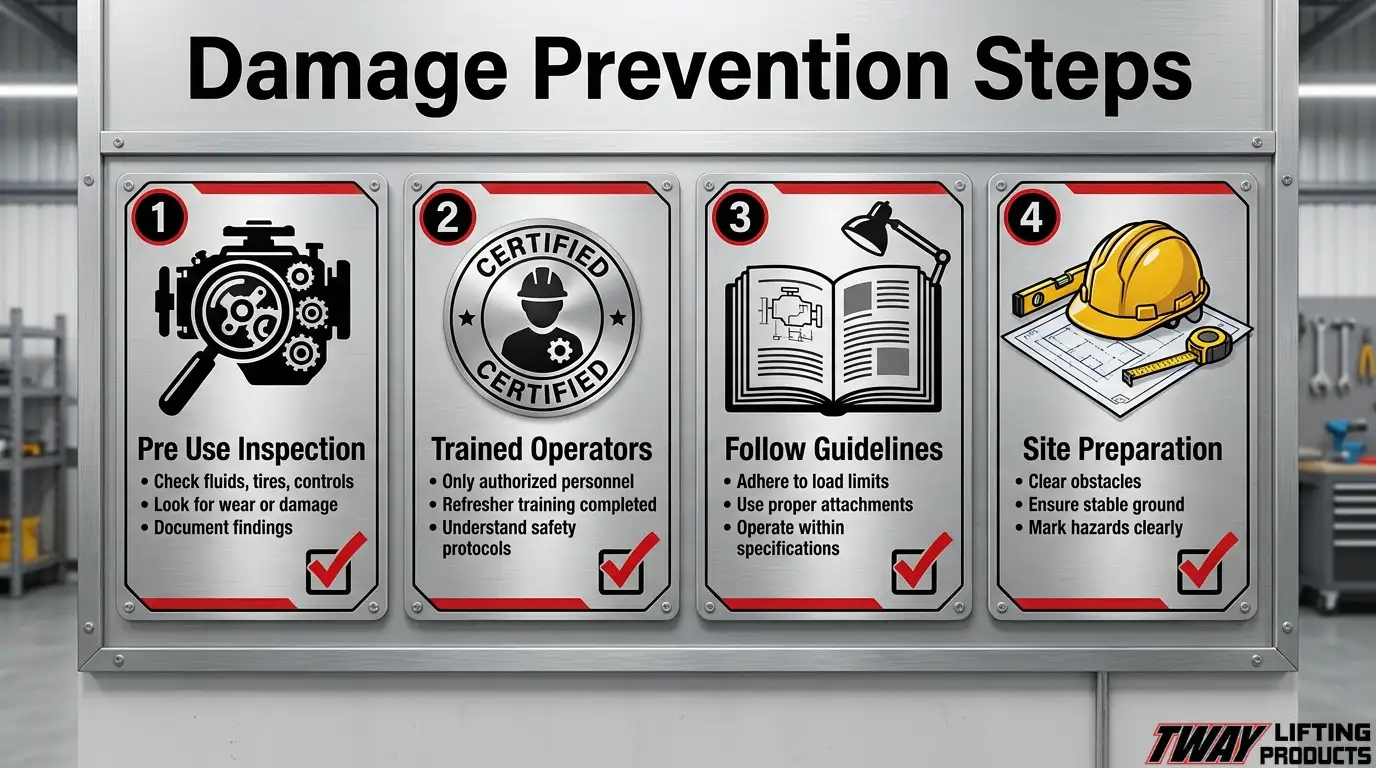
Preventing damage to rental equipment requires consistent inspection, qualified operators, and awareness of the most common failure points. The following sections cover pre-use checks, OSHA-mandated training requirements, and the leading causes of on-site equipment damage
.
What Pre-Use Inspections Should You Perform on Rented Equipment?
Pre-use inspections are checks performed by the equipment operator before each use, following the manufacturer’s instructions. According to the Lifting Equipment Engineers Association, this first-level inspection is the operator’s primary defense against using equipment with existing or developing defects. A thorough pre-use inspection should include:
- Checking structural components for cracks, deformation, or corrosion.
- Verifying load ratings, labels, and identification markings are legible.
- Inspecting hooks, shackles, slings, and rigging hardware for wear or damage.
- Confirming all safety devices, guards, and locking mechanisms function correctly.
- Testing controls for smooth, responsive operation before loading.
How Does Proper Operator Training Reduce Rental Equipment Damage?
Proper operator training reduces rental equipment damage by ensuring each operator has the skills, knowledge, and ability to recognize and avert risk before it becomes a costly incident. According to OSHA regulation 29 CFR 1926.1427, employers must ensure every operator is trained, certified or licensed, and evaluated before operating covered equipment, combining formal instruction with practical application. Untrained operators are far more likely to exceed load capacities, misuse controls, or overlook warning signs that a trained operator would catch immediately.
What Are the Most Common Causes of Rental Equipment Damage?
The most common causes of rental equipment damage are operator error, overloading, improper storage, and inadequate site preparation. These factors are preventable with structured protocols. The leading causes include:
- Operator error: Inexperienced or uncertified operators misusing controls or exceeding rated capacities.
- Overloading: Applying loads beyond the equipment’s rated capacity, stressing structural components.
- Improper rigging: Incorrectly attached slings, hooks, or hardware that shift or fail under load.
- Environmental hazards: Uneven ground, overhead obstructions, or unstable surfaces causing tip-overs or collisions.
- Lack of pre-use inspection: Deploying equipment with pre-existing damage that worsens under operational stress.
Consistent inspection habits, combined with verified operator training, address the majority of these causes before work begins. Tway Lifting’s certified inspection specialists provide OSHA-required annual inspections and job site safety inspections for wire rope slings, chain slings, synthetic slings, hoists, and spreader beams, with detailed reporting included.
How Do Tway Lifting’s Rental and Repair Services Relate to Equipment Damage?
Tway Lifting’s rental and repair services directly support renters in managing lifting equipment damage through inspections, certified repairs, and pre-use compliance. The following sections cover inspection protocols and key damage takeaways.
Does Tway Lifting Offer Inspections and Repairs for Rented Lifting Equipment?
Yes, Tway Lifting offers inspections and repairs for rented lifting equipment through its certified inspection specialists and Peerless/Acco Welded Sling Repair Center. Tway Lifting provides OSHA-required annual inspections, job site safety inspections, and detailed reporting for wire rope slings, chain slings, synthetic slings, hoists, and spreader beams available through its rental program. Tway Lifting is also an authorized Peerless/Acco Welded Sling Repair Center, offering reconditioning of chain slings and wire rope sling fabrication with same-day service capability.
Pre-use inspection is the first level of equipment compliance. According to the Lifting Equipment Engineers Association, this inspection is completed by the operator before each use and in accordance with manufacturer’s instructions. When serious defects are identified during examination, the competent person must immediately report the finding verbally to the dutyholder, followed by a written report sent to the relevant enforcing authority, per the Health and Safety Executive (UK).
Tway Lifting offers same-day wire rope sling fabrication and repair, along with free local delivery and pickup for rental equipment.
What Are the Key Takeaways About What Happens If Rental Equipment Is Damaged?
The key takeaways about what happens if rental equipment is damaged are:
- Report damage immediately. Most rental agreements require prompt notification; delayed reporting can increase your liability exposure.
- Review your rental contract. Damage clauses, loss damage waivers, and return condition requirements vary by provider and govern what you owe.
- Distinguish damage types. Normal wear and tear, accidental damage, and negligent misuse each carry different financial consequences.
- Verify insurance coverage. General liability, inland marine, and rental equipment floater policies each cover different scenarios; confirm your coverage before the rental period begins.
- Document everything. Photographs, written incident reports, and inspection records protect you if costs are disputed.
- Use certified operators. OSHA requires employers to ensure each crane and lifting equipment operator is trained, certified, and evaluated before operating covered equipment.
Tway Lifting combines over 75 years of lifting expertise with rental, inspection, and repair services to support compliance and damage liability management on the job.