



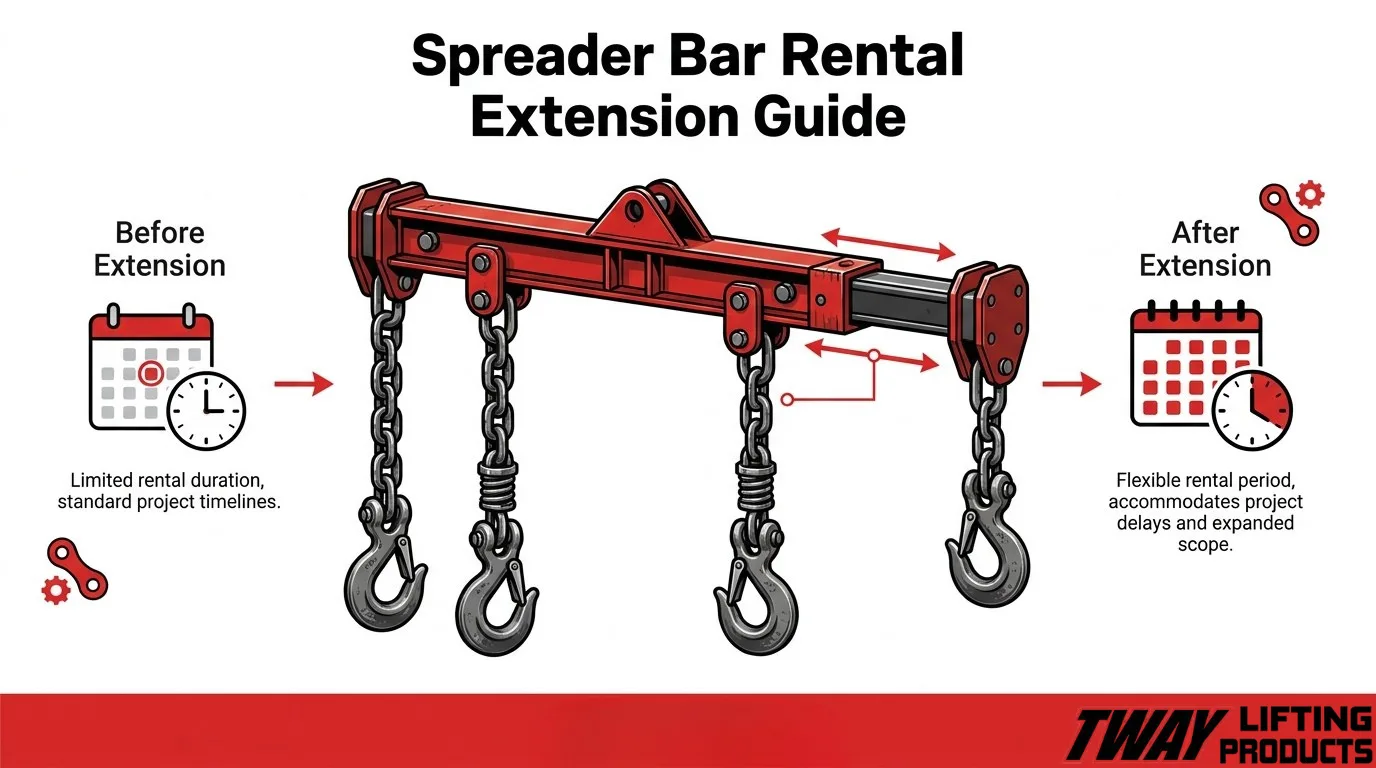

A spreader bar rental extension is a formal agreement between a renter and a rental provider to continue using a spreader bar beyond the original contract end date. Rather than returning the equipment and re-renting, an extension modifies the existing rental term under agreed-upon conditions and rates.
This guide covers why extensions become necessary, how to request them correctly, the cost and contract implications involved, your responsibilities during the extended period, and how Tway Lifting supports extended rigging projects.
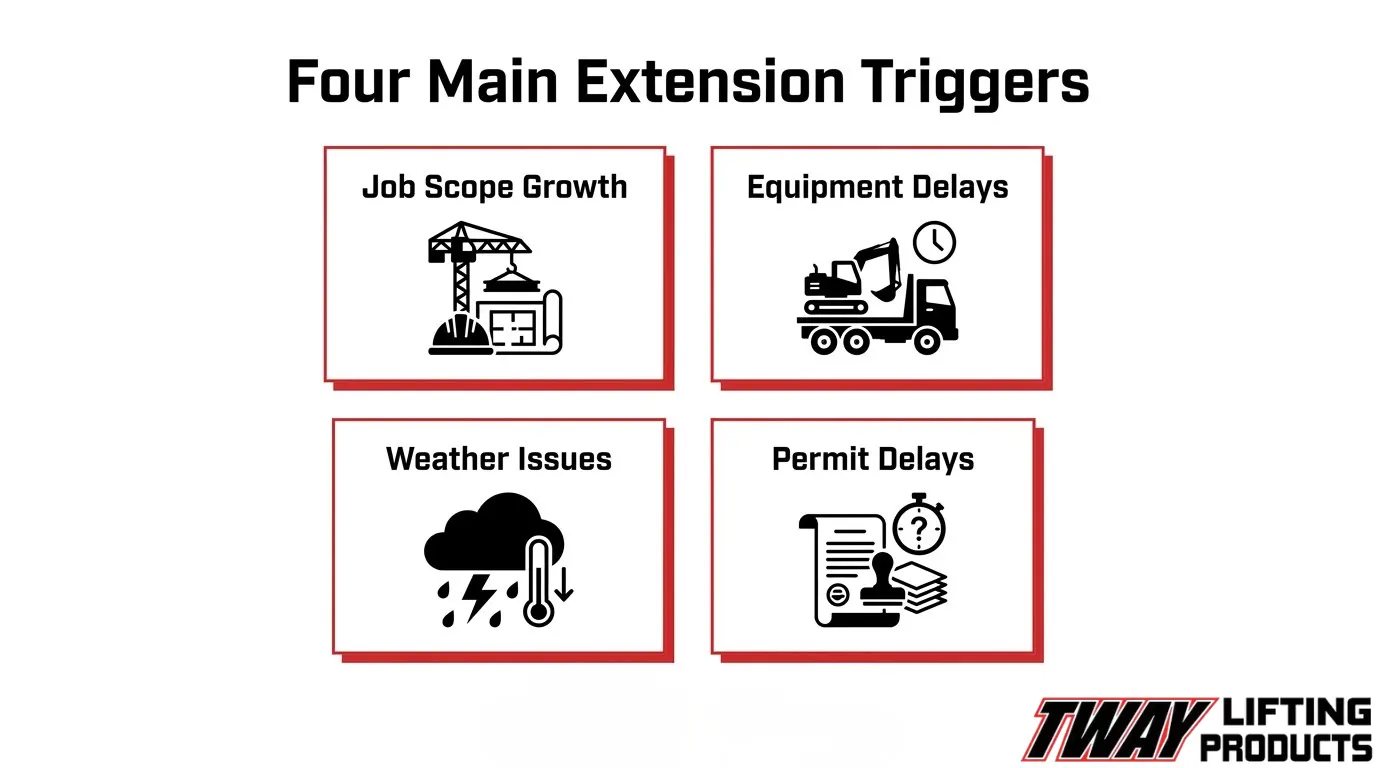
Rental extensions are triggered by four common conditions: job scope growth, equipment or delivery delays, weather disruptions, and permit or inspection holdups. Each one consumes rental days without productive lift work, making early awareness critical.
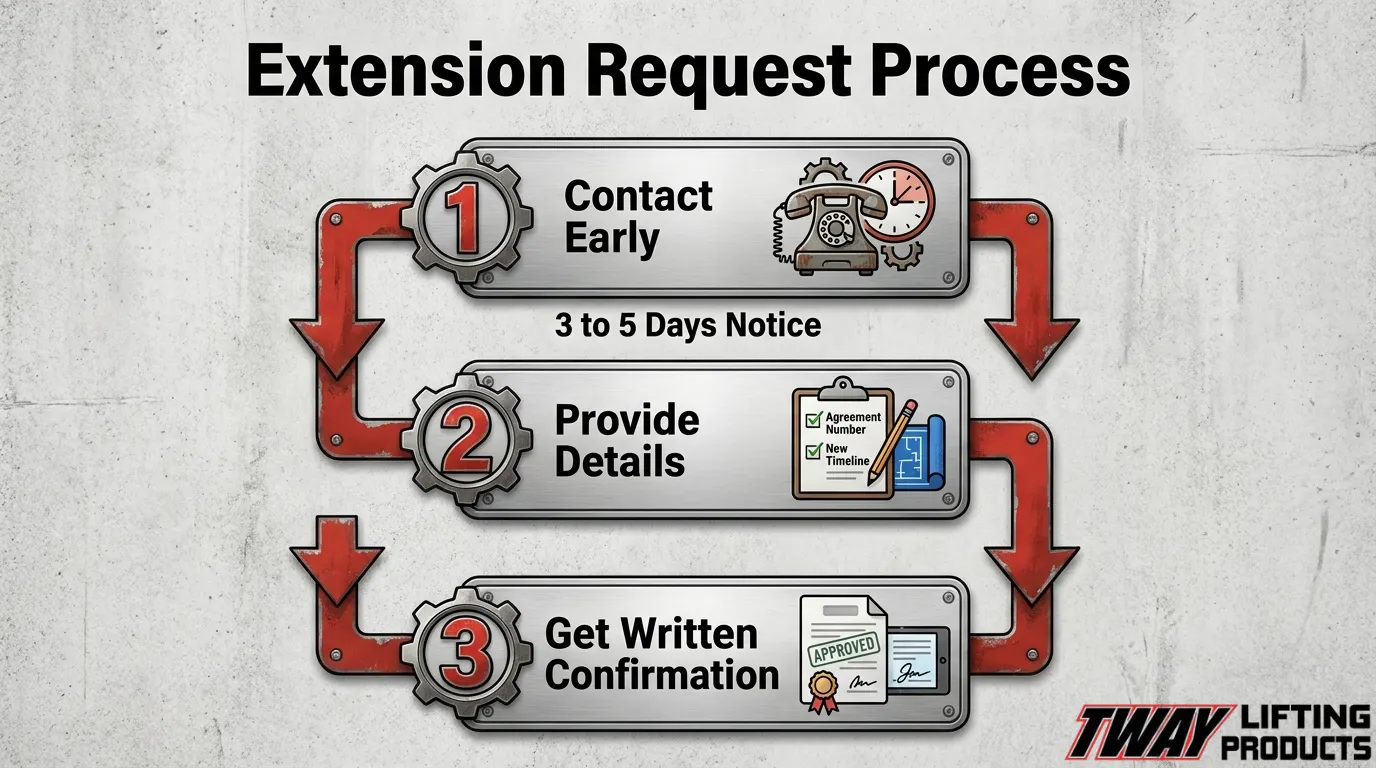
Requesting an extension the right way requires contacting your provider at least 3 to 5 business days before the return date, having your rental agreement number and revised project timeline ready, and confirming all changes in writing. Verbal agreements leave rate and timing details open to dispute.
Extensions carry real cost implications. Day-to-day rates accumulate faster than weekly or monthly terms, late-notice extensions may trigger penalties, and long-term extensions can introduce ASME B30.20 compliance inspection costs that shift to the renter depending on contract terms.
Your contract governs what happens next. Extension clauses, liability coverage, and equipment availability limits all affect whether your original unit stays on site or gets reassigned to another customer.
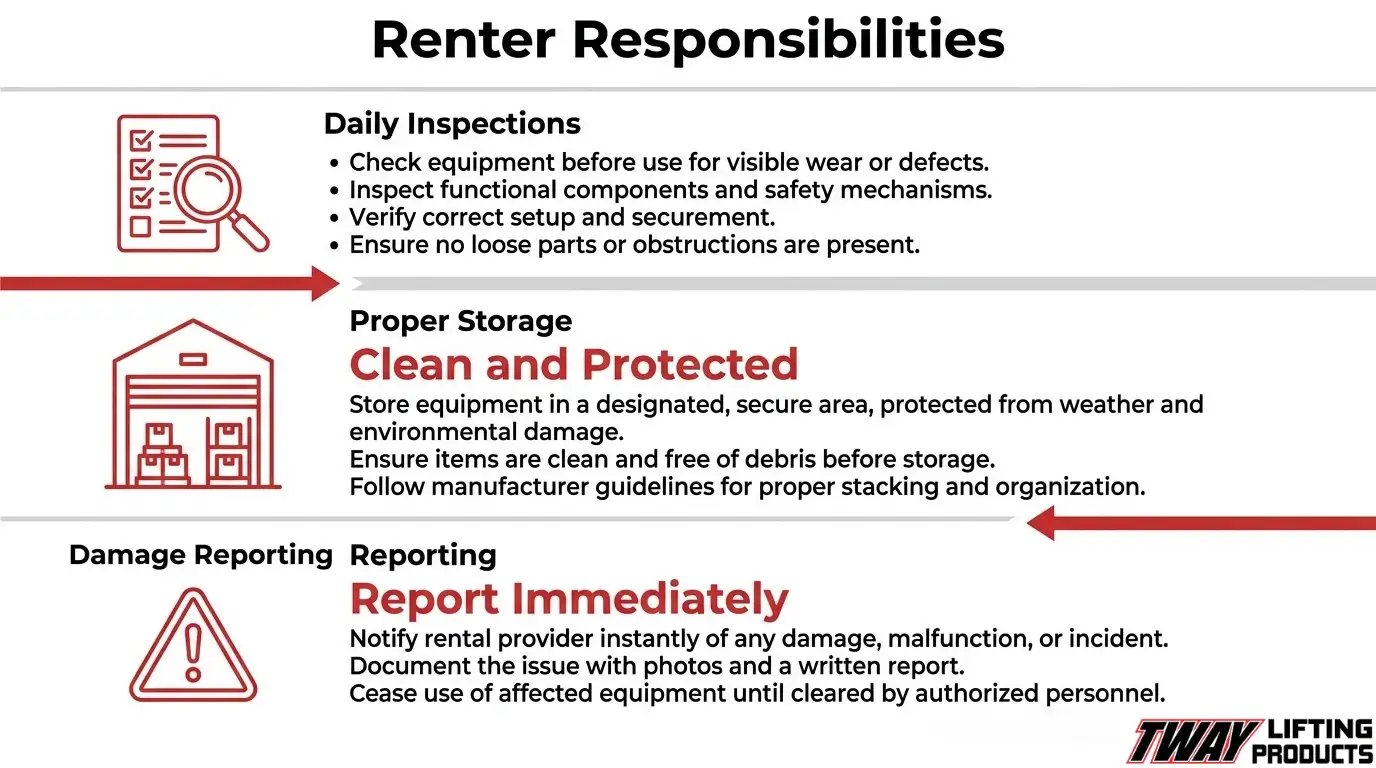
Throughout any extended period, the renter holds responsibility for pre-lift inspections, proper storage, damage reporting, and compliance with ASME B30.20 standards for below-the-hook lifting devices.
What Is a Spreader Bar Rental Extension?
A spreader bar rental extension is a formal agreement between a renter and a rental provider to continue using a spreader bar beyond the original contract end date. Rather than returning the equipment and re-renting, an extension modifies the existing rental term under agreed-upon conditions and rates.
Tway Lifting offers spreader beams ranging from 2 to 100 tons, up to 40 ft, available as fixed, adjustable, or telescopic models rated to ASME B30.20 standards. Understanding what an extension involves helps renters act early, avoid penalties, and maintain uninterrupted lifting operations.
Why Would You Need to Extend a Spreader Bar Rental?
Rental extensions become necessary when real-world conditions outpace your original project timeline. The H3s below cover the four most common triggers: job scope growth, equipment delays, weather disruptions, and permit or inspection holdups.
What Happens When a Job Takes Longer Than Expected?
Job timelines extend when scope grows, crews encounter unforeseen structural conditions, or sequencing shifts during a lift. A spreader bar rental originally sized for a three-day installation may need another week if additional load points are identified mid-project. Returning the equipment only to re-rent it later wastes both time and mobilization cost. Extending the existing agreement keeps the right-rated bar on site and maintains continuity for the rigging crew.
What If Equipment Delivery or Setup Gets Delayed?
Equipment delivery or setup delays push every downstream task back by the same margin. If a crane arrives late, rigging hardware is held at customs, or site access is restricted, the spreader bar sits idle while the rental clock runs. These delays consume rental days without productive lift work. Contacting your provider early to adjust the rental end date prevents a gap between what you paid for and what you actually used. Tway Lifting’s rental team offers daily, weekly, and monthly terms with free local delivery and pickup, making it straightforward to adjust timelines without restarting the rental process from scratch
How Do Weather or Site Conditions Force a Rental Extension?
Weather and site conditions force a rental extension when lifts cannot safely proceed as scheduled. According to NOAA Climate.gov, the construction industry loses billions of dollars annually on delays and failures caused by bad weather. High winds, lightning, frozen ground, or saturated soil can ground crane operations for days. Unstable site conditions, including soft bearing surfaces or proximity hazards, also pause work until remediated. These are largely uncontrollable variables, making rental flexibility an operational necessity rather than an exception.
What If Inspection or Permit Approvals Push Back Your Timeline?
Inspection or permit approvals push back timelines when regulatory review takes longer than originally scheduled. The City of Miami grants permit extensions for 180 days from the date of request to complete all required work and finalize all required inspections. When permits stall, structural inspections queue behind them, and no compliant lift can begin until both clear. Holding the spreader bar through this window avoids remobilization costs if approvals land sooner than expected. For projects in the Indianapolis or Fort Wayne area, Tway Lifting’s rigging inspection specialists can also help ensure compliance documentation stays current while permit timelines shift.
How Early Should You Request a Spreader Bar Rental Extension?
You should request a spreader bar rental extension as early as possible, ideally at least 3 to 5 business days before your current rental period ends. Early notice protects your equipment availability and prevents last-minute scheduling conflicts with other renters.
The subsections below cover the key timing factors: recognizing when delays are forming, how notice windows work, and what early action prevents.
How to Recognize When You Need More Time
Recognizing when you need more time starts with monitoring your project milestones daily against your original lift schedule. Common signals include unresolved permit approvals, incomplete site access, or rigging crew scheduling gaps. Once any single milestone slips, your rental end date becomes a risk. Waiting until the final day to act is the most common and most preventable extension mistake.
Why Waiting Too Long Puts Your Equipment Availability at Risk
Waiting too long puts your equipment availability at risk because spreader bars in specific tonnage ranges, such as 10-ton adjustable or 50-ton telescopic units, may be reserved by other customers immediately after your scheduled return date. Rental equipment operates on a first-confirmed basis. If you contact your provider only 24 hours before the return deadline, a replacement unit of equal capacity may not be available, forcing a costly project pause.
What the Minimum Notice Window Looks Like in Practice
The minimum notice window for a spreader bar rental extension is typically 2 to 3 business days, but longer projects with specialized equipment justify requesting 5 to 7 days in advance. The Federal Highway Administration’s standard contracts require written extension requests within 10 days of the delay’s onset, a benchmark that reflects how professional project management handles timeline changes. Earlier notice also gives your provider time to adjust inspection records and rental documentation before the current agreement lapses.
How Do You Contact a Rental Provider to Extend Your Agreement?
You contact a rental provider to extend your agreement by reaching out directly through phone, email, or an online inquiry form before your current rental period ends. The sections below cover what information to prepare and how to confirm your extension in writing.
What Information Should You Have Ready Before Calling?
The information you should have ready before calling includes your rental agreement number, the specific spreader bar model and capacity, your current return date, and your revised project end date. Having these details on hand lets the provider check equipment availability and quote updated rates without delays. Organized renters move faster through the extension process, and that preparation often determines whether the same unit stays on your job site or gets reassigned.
Should You Request a Rental Extension in Writing?
Yes, you should request a rental extension in writing whenever possible. A written request, whether by email or a signed amendment, creates a clear record of the agreed new return date, updated rates, and any modified terms. According to Federal Highway Administration contract specifications, written extension requests should be submitted promptly after a delay begins, which reinforces that documenting changes early protects both parties from disputes over timing and cost.
How Do You Confirm the Extension Is Approved?
You confirm the extension is approved by obtaining a written acknowledgment from the provider that specifies the new return date and any revised pricing. A verbal agreement alone leaves both the rate and the timeline open to interpretation. Request a revised rental order or email confirmation before continuing to use the equipment past the original return date.
With your extension confirmed in writing, the next step is understanding what fee changes or rate adjustments apply to the additional rental period.
What Fees or Rate Changes Come With Extending a Rental?
Fees and rate changes that come with extending a rental depend on timing, rental duration, and the terms in your agreement. The H3s below cover day-to-day versus weekly pricing, late-notice penalties, and how long-term extensions affect your total cost.
Does Extending Day-to-Day Cost More Than Weekly Rates?
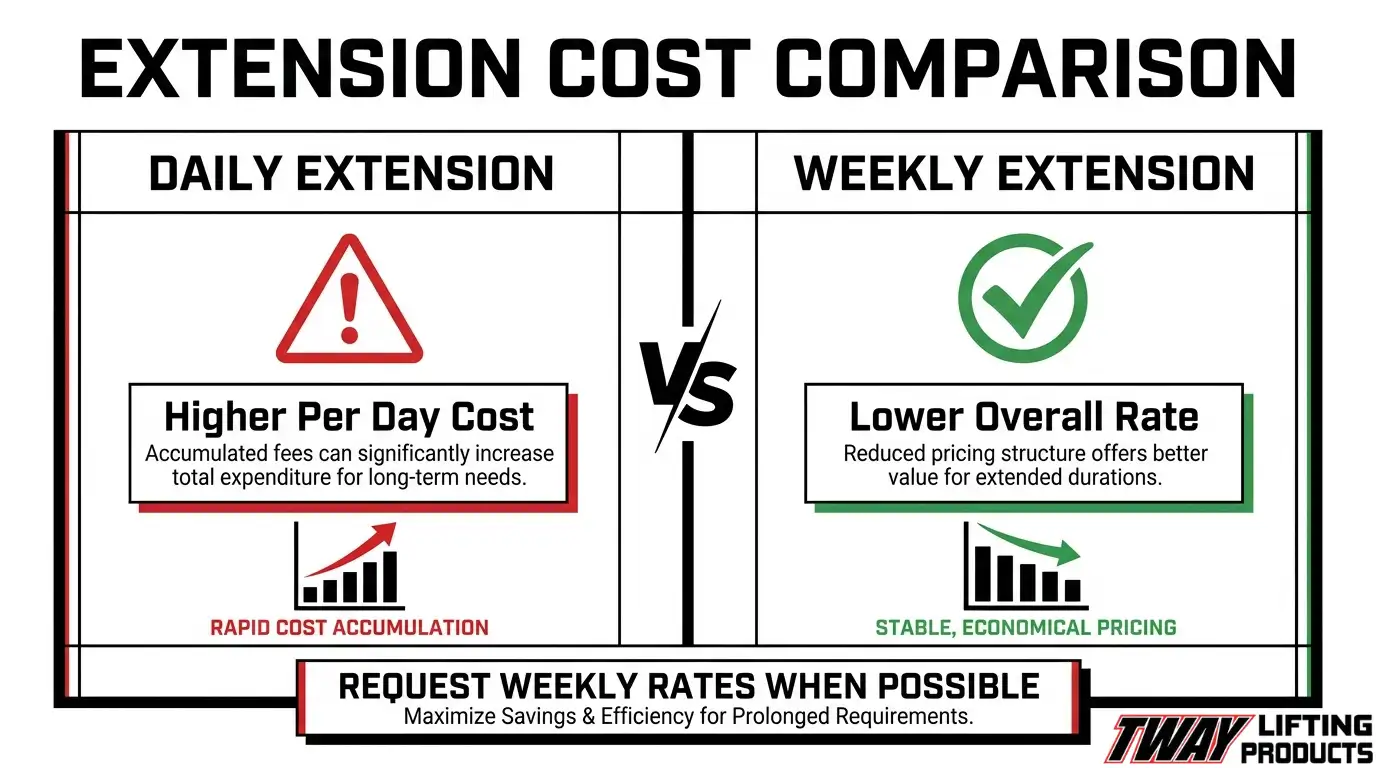
Extending day-to-day typically costs more than locking in a weekly rate. Most rental providers structure pricing so that daily rates accumulate faster than a flat weekly or monthly rate, meaning renters who extend one day at a time often pay a premium compared to those who commit upfront to a longer term.
Washington State procurement guidelines require vendors to submit separate day, week, and month rates, confirming that tiered pricing structures are standard practice across equipment rentals. If your project timeline becomes uncertain, requesting a weekly extension rate rather than rolling over daily is almost always the more cost-effective approach.
Are There Penalties for Extending Without Advance Notice?
Penalties for extending without advance notice vary by provider, but late or unannounced extensions commonly trigger fees such as:
- A flat administrative or processing fee added to the next billing cycle.
- Reversion to the higher daily rate for any days that fall outside the original agreement.
- Loss of priority hold on the equipment, which may result in a substitution surcharge if a replacement unit is needed.
Communicating your extension request as early as possible protects you from these charges. Providers generally have more pricing flexibility when they receive advance notice, since it allows them to manage equipment availability and scheduling.
How Do Long-Term Extensions Affect Your Total Rental Cost?
Long-term extensions affect your total rental cost by shifting your billing structure from short-term rates to monthly rates, which typically carry a lower per-day cost but involve larger lump-sum invoices. The longer the extension, the more important it becomes to renegotiate your rate tier rather than letting the agreement roll over automatically at the original daily or weekly price.
For below-the-hook lifting devices like spreader bars, extended rental periods may also introduce compliance-related costs. Per U.S. Department of Energy standards, below-the-hook lifting devices must be inspected and maintained in conformance with ASME B30.20. If an inspection falls due during a long-term extension, that cost may transfer to the renter depending on your contract terms.
What Should You Review in Your Rental Contract Before Extending?
Your rental contract contains specific language governing extensions, liability, and equipment availability. The H3s below cover extension clauses, liability coverage, and availability limits written into most agreements.
What Do Extension Clauses Typically Say?
Extension clauses typically say when and how a renter may request additional rental time, what notice period is required, and what rate applies during the extended period. Most clauses specify whether the original rate holds or converts to a higher day-rate. Some contracts require written requests within a defined window, similar to federal contracting standards where extension requests must be submitted within 10 days of a delay’s onset, per Federal Highway Administration contract specifications. Reviewing these terms before your project starts helps avoid unexpected cost increases or disputes.
What Liability Coverage Applies During an Extended Period?
Liability coverage during an extended period typically remains governed by the original contract, though some agreements include clauses that modify insurance requirements or shift damage liability after the original return date passes. Renters should confirm whether their existing certificate of insurance covers the extended duration and whether the rental provider requires updated documentation. Gaps in coverage during extensions are more common than most renters expect, making this one of the most important clauses to verify before requesting more time.
Are There Equipment Availability Limits Written Into the Contract?
Equipment availability limits are provisions in rental contracts that allow the provider to recall or reassign a unit if another booking takes priority after the original return date. These limits vary by provider, but common terms include:
- A defined window after the scheduled return date during which extension is guaranteed.
- Provider right-to-recall clauses if the equipment is reserved by another customer.
- Substitution language permitting an equivalent unit in place of the original.
Confirming these terms upfront prevents gaps in your lifting operation if a competing booking arises.
What Happens If the Same Spreader Bar Is Not Available for Extension?
If the same spreader bar is not available for extension, the rental provider typically offers a comparable substitute unit that meets the same capacity, configuration, and compliance specifications as the original. The specific resolution depends on the provider’s inventory and your project requirements.
Common outcomes renters encounter include:
- Substitute unit assignment: The provider swaps in a different unit of equal or greater rated capacity, rated to ASME B30.20 standards, so your lift plan remains compliant.
- Delivery swap: The original bar is picked up and a replacement is delivered, which may introduce a short equipment gap requiring schedule adjustment.
- Upgrade to adjustable or telescopic bar: If a fixed-length match is unavailable, a telescopic or adjustable unit in the same tonnage range may serve as a functional alternative.
- Rental transfer or hold: Some providers allow a temporary hold while the correct unit becomes available from another job site or inventory location.
- Project pause: In rare cases, if no compliant substitute exists, rigging operations must pause until suitable equipment is sourced.
Tway Lifting offers spreader beams from 2 to 100 tons in fixed, adjustable, and telescopic configurations, which significantly reduces the risk of encountering a true availability gap. A provider with deep, varied inventory is your best protection against project disruption when an extension is needed on short notice.
What Are Your Responsibilities During an Extended Spreader Bar Rental?
Your responsibilities during an extended spreader bar rental cover three areas: inspection, maintenance, and damage liability. The H3 sections below address each obligation in detail.
Who Is Responsible for Inspecting the Bar During an Extended Period?
The renter is responsible for inspecting the spreader bar throughout any extended rental period. ASME B30.20 requires that below-the-hook lifting devices be inspected, operated, and maintained in conformance with its standards, and that obligation follows the equipment regardless of whether the original rental term has been extended. Practically speaking, this means your team must conduct visual checks before each lift, document any observed wear or deformation, and flag concerns to the rental provider immediately. Relying solely on the pre-rental inspection is a common oversight that increases liability exposure on longer jobs.
What Maintenance Obligations Does the Renter Hold?
The renter’s maintenance obligations include keeping the spreader bar clean, storing it properly when not in use, preventing unauthorized modifications, and reporting any operational issues without delay. Most rental agreements mirror standard equipment lease language, which places day-to-day care squarely on the lessee during the possession period. Renters do not perform structural repairs themselves, but they are expected to protect the bar from conditions that accelerate wear, such as exposure to corrosive materials or improper rigging loads.
What Happens If Damage Occurs During the Extension Period?
If damage occurs during the extension period, the renter bears financial and legal responsibility for that damage under the terms of the rental agreement. According to Federal Highway Administration contract standards, when changes during a project period create additional complications, written documentation submitted promptly is critical to establishing a clear record. The same principle applies in equipment rental: report damage to the provider in writing as soon as it is discovered, preserve photographic evidence, and avoid continuing to use a compromised bar. Undisclosed damage discovered at return is typically treated as renter negligence, which removes any shared-liability protections the original contract may have provided.
How Does Extending a Rental Compare to Renting a New Unit?
Extending a rental compares to renting a new unit in cost, continuity, and operational efficiency, with each option carrying distinct trade-offs depending on your project timeline and equipment needs.
Cost Comparison: Extension vs. New Rental
Extending an existing spreader bar rental typically costs less than initiating a new rental agreement. A new rental requires fresh paperwork, potential re-delivery fees, and a new minimum rental period. Extending avoids those setup costs entirely, making it the more economical choice when your project timeline shifts unexpectedly.
Continuity and Familiarity With Equipment
Extending your current rental preserves continuity with equipment your crew already knows, reducing the adjustment time associated with receiving a different unit. Because Tway Lifting manufactures, sells, and rents its own equipment, renters working with them benefit from a single point of accountability for equipment specs, condition records, and compliance history across the full rental period. Swapping to a new bar introduces the need to re-verify load ratings, attachment points, and configuration, adding time and compliance overhead your team could avoid by simply extending the original agreement.
When Renting a New Unit Makes More Sense
Renting a new unit makes more sense when your load requirements change, your original unit is unavailable, or a longer-term project justifies negotiating a different rate structure. If the project scope has expanded significantly, a different capacity bar may be required regardless of the extension option. Tway Lifting offers spreader beams from 2 to 100 tons, giving projects the flexibility to right-size equipment at any stage.
How Do Spreader Bar Rental Extensions Work With Rigging Equipment Rental?
Spreader bar rental extensions work alongside rigging equipment rental by allowing renters to keep the full complement of lifting gear, including slings, shackles, and hoists, active under a single coordinated agreement. The sections below cover Tway Lifting’s rental services for extended projects and key takeaways from this guide.
Does Tway Lifting Offer Equipment Rental Services for Extended Projects?
Yes, Tway Lifting offers equipment rental services for extended projects across its full rigging inventory. Available rental items include:
- Wire rope slings and synthetic slings
- Chain slings and shackles
- Spreader beams rated from 2 to 100 tons
- Hoists and load cells
- Telescopic adjustable length bars
Rentals are available on daily, weekly, or monthly terms, with free local delivery and pickup from Tway Lifting’s Indianapolis and Fort Wayne, Indiana superstores. According to a Nevada Division of Conservation Districts equipment rental agreement, lessees should inspect all rental equipment within three business days of receipt, a best practice that protects both parties during any extended rental period. For complex, long-duration lifts, coordinating your spreader bar extension with the full rigging package under one provider simplifies accountability and keeps your project moving.
What Are the Key Takeaways About Extending Your Spreader Bar Rental Period We Covered?
The key takeaways about extending your spreader bar rental period are centered on proactive planning, clear communication, and contractual awareness. The most actionable lessons from this guide include:
- Request extensions before your original rental term expires, not after.
- Review your contract’s extension clauses, liability coverage, and availability limits before signing.
- Confirm whether day-to-day rates apply once a weekly or monthly term ends.
- Inspect the spreader bar throughout the extended period and document any damage immediately.
- Coordinate spreader bar extensions with your full rigging equipment rental to avoid gaps in coverage.
Working with an experienced provider like Tway Lifting, which manufactures, sells, and rents its own equipment, removes the coordination friction that comes with managing multiple vendors across a delayed project timeline.